
Master overload situations with practical 2v1 and 3v2 drills for U12 players. Learn how to teach numerical advantage recognition, quick passing, and tactic
Overload situations are among the most valuable tactical concepts you can teach grassroots players. When your team has numerical advantage in a specific area—whether that's a 2v1 or 3v2 scenario—you've created a golden opportunity to move the ball faster than defenders can react. At U12, when players are developing their tactical awareness and game understanding, teaching them to recognize and exploit these advantages is fundamental to building intelligent footballers.
Numerical superiority is temporary. It only works if your players move the ball quickly enough to convert the advantage into a clear chance before opponents recover their shape. This session develops the decision-making speed, passing accuracy, and movement patterns that make overloads effective in competitive matches.
Why Overloads Matter at U12
At this age group, players are transitioning from basic technical skills toward tactical understanding. They're beginning to recognize space, anticipate movements, and make faster decisions under pressure. Overload situations provide the perfect framework to accelerate this development.
When players have more teammates than opponents in a zone, several things happen simultaneously: passing angles multiply, defensive pressure decreases, and the time available to make decisions increases slightly. These conditions allow young players to focus on quality execution rather than crisis management. Over time, this builds confidence and accelerates their tactical maturity.
Moreover, overload awareness applies across all positions and formations. A centre-back recognizing a 3v2 advantage in defence applies the same principles as a winger exploiting a 2v1 in the attacking third. Teaching this universal principle creates transferable knowledge that improves overall football intelligence.
Setting Up Your Session
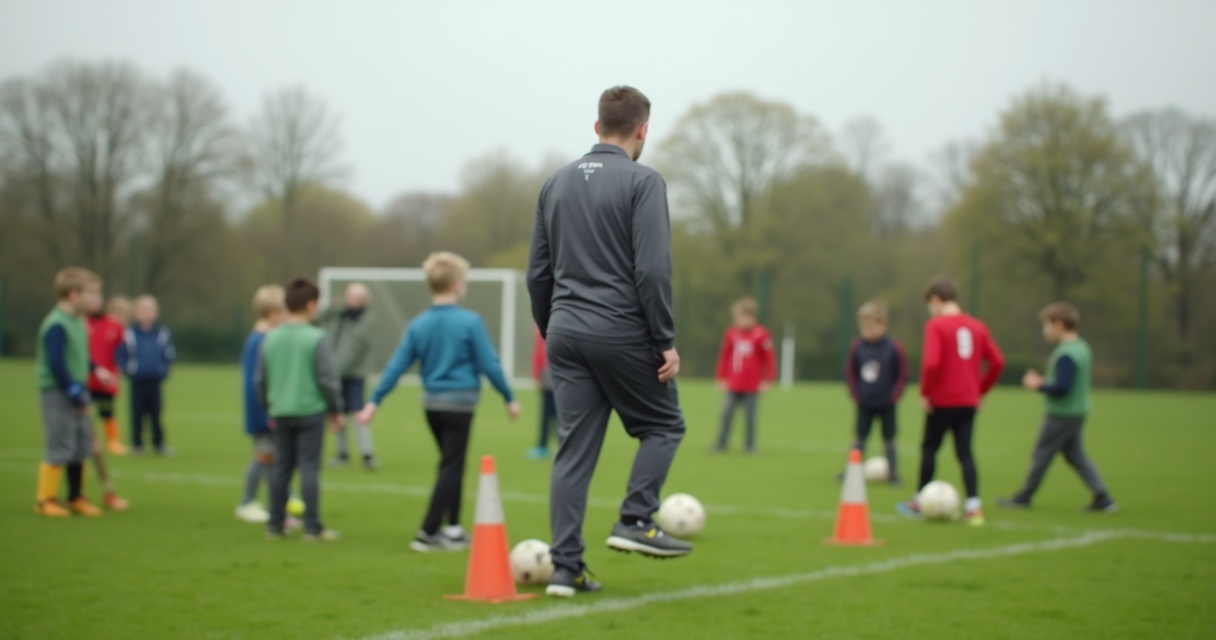
You'll need a 40x30 yard area, 12-16 players, multiple footballs, cones, and bibs to differentiate teams. The space should be clearly marked into zones to help players understand where overloads are occurring. Having multiple balls available keeps the session flowing—whenever a goal is scored or the ball goes out of play, another ball is immediately in.
Start with a brief explanation of what you're working on. Use simple language: "Today we're learning to spot when we have more players than the other team in one area. When that happens, we move the ball really quickly to create a chance before they can get back." This clarity helps players understand the purpose of every drill.
Drill 1: 2v1 Wave Drill (Basic Principles)
Create three 15-yard zones across the field. Place one defender and two attackers in the first zone. The attackers must combine passes and progress into the next zone. If they score or the defender wins the ball, play transitions immediately to the next zone with fresh players.
Rotate every two minutes so players experience all three positions. This drill establishes three fundamental principles: quick passes with few touches, purposeful movement off the ball to create passing angles, and composure when finishing under minimal pressure.
Coaching focus here is on transition speed. Constantly reinforce: "Move the ball faster than he can recover." When attackers hesitate or take extra touches, the defender closes them down. When they pass immediately, angles open up. Players learn this through repetition far better than any explanation.
Progression 1: 3v2 Box Game (Tactical Development)
Progress to a 25x20 yard area with 3v2 possession. The attacking team scores by completing five consecutive passes or by hitting a target player on the sideline. This constraint teaches patience—sometimes the immediate shot isn't the best option; sometimes holding possession while a supporting teammate moves into space is smarter.
The third attacker becomes crucial here. Players must actively seek passing options from their extra player rather than defaulting to the ball carrier. This develops spatial awareness and forces them to scan the field and make intelligent decisions about where the ball needs to go.
Rotate every five minutes. Running short rotations keeps intensity high and prevents fatigue from affecting quality.
Progression 2: Game-Realistic Overload (Match Application)
Move to 8v8 play on a realistic pitch with overload zones marked by cones. Offer bonus points when teams create 2v1 or 3v2 advantages in these zones and score from them. This develops pattern recognition in game conditions—players learn to spot overloads organically rather than in artificial drills.
The bonus points system creates incentive without removing the natural flow of the game. Players instinctively start hunting for these situations, which accelerates their tactical development.
Key Coaching Cues
Throughout all progressions, use these consistent cues:
- "Move the ball faster than defenders can recover." Speed of play is everything.
- "Use your extra player to create passing angles." The numerical advantage only matters if they receive the ball.
- "Keep touches light and quick." Heavy touches slow everything down.
- "Scan before receiving." Good decisions start before the ball arrives.
- "One-touch passing when possible." Maximum speed execution.
- "Support the ball carrier immediately." Creates passing options instantly.
Session Outcomes
After this session, your U12 players should recognize when overloads exist, understand why moving the ball quickly matters, and begin making better decisions about when and how to exploit numerical advantage. These principles transfer directly into competitive matches, where recognizing and executing overloads separates good teams from excellent ones.
The beauty of this coaching approach is that you're building tactical intelligence alongside technical execution. Your players develop not just how to pass, but when and why passing creates opportunities. That's the foundation of intelligent football.
Written and reviewed by the PlayTactiq Coaching Team
Practical guidance for grassroots coaches, shaped around age-appropriate sessions, clear coaching language and real match-day problems.
Put it into a session
Ready-to-run U12 session plans
Setup, animated diagrams, coaching points and player-number adaptations — every U12 session in one place.
U12 football session plans →