
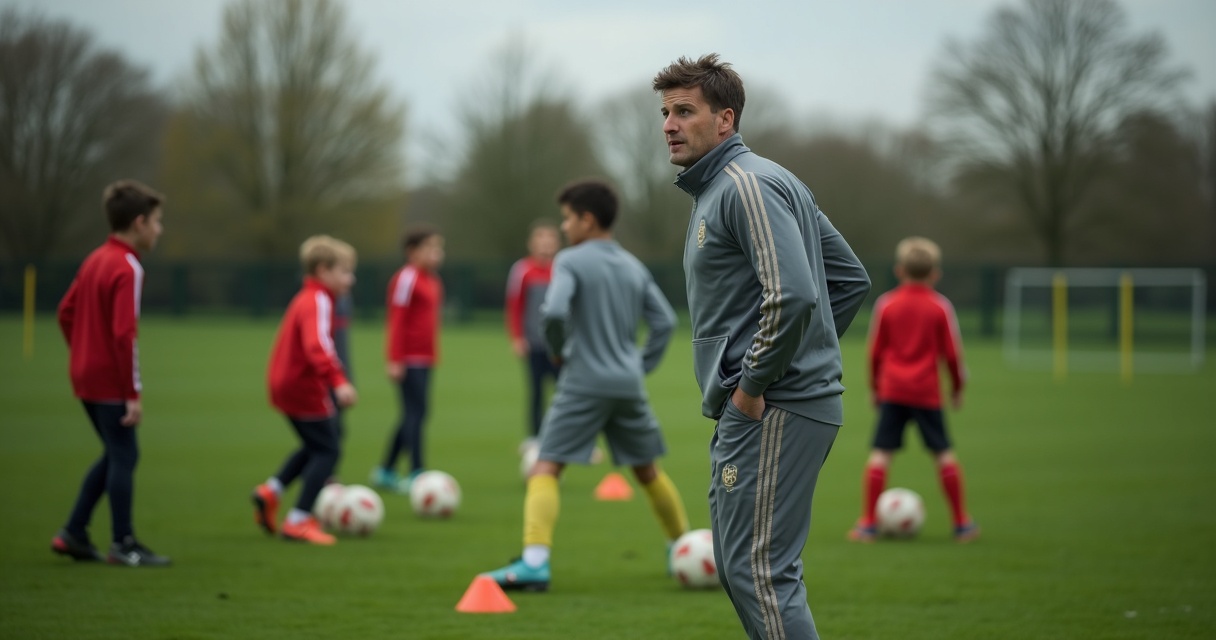
Learn how to teach wall passes and overlapping runs to U14 players. This combination play guide includes progressive drills, coaching cues, and techniques
Combination play is one of football's most powerful attacking weapons. When young players master wall passes and overlapping runs, they unlock the ability to break down defensive structures through intelligent movement and quick decision-making. At U14, players have developed sufficient technical ability and cognitive awareness to understand these patterns—and the benefits are immediate. Teams that execute combination play effectively force defenders into reactive positions rather than allowing them to dictate play.
This guide will help you teach wall passes and overlaps systematically, using progressive drills that develop both technique and game understanding.
Understanding Wall Passes and Overlaps
A wall pass, also known as a one-two or give-and-go, is the simplest form of combination play. Player A passes to a teammate (Player B), who immediately returns the ball first-time, allowing Player A to advance into space. The key is timing: Player B must return the pass as Player A moves forward, creating continuity and bypassing defensive pressure.
An overlap occurs when a teammate runs beyond an attacking player to receive the ball in a wider area. This creates numerical superiority, stretches defensive lines, and opens shooting opportunities. Overlaps are particularly effective along the flanks, where space naturally exists.
Both patterns teach U14 players critical lessons: movement timing matters as much as technique, positioning creates opportunities, and coordinated team play overwhelms individual defending. Players learn to trust teammates' runs and recognize when these patterns are available—skills that separate developing players from advanced ones.
Progressive Drill Structure: Wall Pass Foundation
Start with the foundation. Set up a 40x30 yard area and organize players into two groups of 6-8. Use a simple triangle formation with three players positioned 15 yards apart.
Progression 1: Basic Wall Pass
Player A passes to Player B, who immediately returns the ball first-time. Player A moves into space to receive it, then passes to Player C. The pattern rotates continuously.
Focus your coaching on these elements:
- Timing of the return pass: Player B must release the ball the moment Player A begins moving forward, not before or after
- Quality of first touch: Player A's first touch should be into space, positioning them to move away from their starting position
- Head position: All players should maintain awareness of field position, not watch the ball
Run this progression for 8-10 minutes. Rotate positions so every player experiences being the passer, the wall player, and the receiver in space. This builds understanding of each role's responsibilities.
Adding Pressure: Realistic Decision-Making
Progression 2: Directional Pressure
Introduce a defender who pressures the wall player (Player B). This forces real decisions: can the wall pass work here, or should a different option be chosen?
This is where learning deepens. Under no pressure, any pass can work. Under pressure, players must:
- Assess whether the wall pass remains viable
- Adjust passing angles to bypass the defender
- Communicate quickly with their wall player
- Recognize when an alternative pattern suits the situation better
Coach the wall player to stay side-on, receiving and passing in one smooth motion. A front-facing wall player invites pressure and slows play. A side-on position allows quick scanning and reactive passing.
Keep this progression short—8-10 minutes—but impactful. Players should feel challenged but not overwhelmed.
Small-Sided Game: Combination Play in Context
Progression 3: 4v4 Half-Field Format
Transition to a small-sided game where players apply wall passes and overlaps within realistic attacking sequences. The smaller space forces quick decisions and regular combination play opportunities.
Encourage players to:
- Use wall passes to progress toward the goal
- Transition into overlap runs along the flanks
- Combine both patterns in attacking sequences
Let the game flow, but pause briefly when teaching moments arise—a missed overlap run, excellent wall pass execution, or poor timing. These moments cement understanding better than any static drill.
Essential Coaching Cues
Use these phrases consistently throughout all progressions:
- "Pass and move immediately, don't watch the ball" - Reinforces that successful combination play requires constant motion
- "Wall player, stay side-on to receive and pass" - Prevents players from becoming passive recipients
- "Run into space at pace, not backwards" - Ensures runs create attacking momentum, not defensive safety
- "Keep your head up to read the field" - Develops awareness before receiving the ball
- "First touch controls the ball, second touch passes it" - Simplifies the technical requirement into clear steps
Practical Session Management
Rotate positions frequently. Every player must understand what it feels like to be in each role. A center-back benefits from experiencing the pace and timing required of the overlapping winger. A striker learns what defenders face when combination play stretches their shape.
Keep progressions relatively short—8-10 minutes each. This maintains intensity and focus, preventing players from becoming bored or sloppy.
End with the small-sided game, where players apply learning under competitive pressure. This is where understanding becomes instinct.
Why This Matters for U14 Players
At U14, players are developing the cognitive ability to think multiple passes ahead and recognize space before receiving the ball. Combination play develops these capacities rapidly. Players who master wall passes and overlaps don't just improve their attacking play—they develop decision-making skills, spatial awareness, and the confidence to execute under pressure.
Over a full season, consistent work on combination play transforms individual technical ability into coherent team attacking strategies. Your players will recognize and exploit defensive vulnerability instinctively, creating more scoring opportunities and enjoying more attacking success.
Written and reviewed by the PlayTactiq Coaching Team
Practical guidance for grassroots coaches, shaped around age-appropriate sessions, clear coaching language and real match-day problems.
Put it into a session
Ready-to-run U13 and U14 session plans
Setup, animated diagrams, coaching points and player-number adaptations — every U13 and U14 session in one place.
U13 and U14 football session plans →