
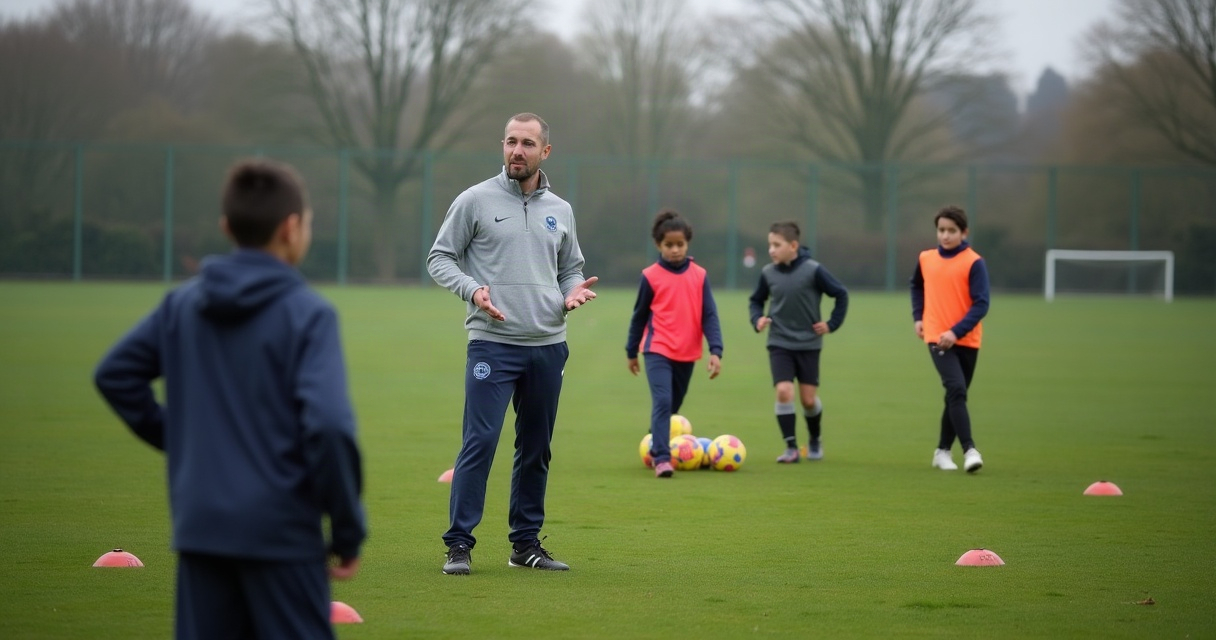
Fix common errors in U11 possession coaching to build confidence and enjoyment.
Overemphasizing Passing Success
Focusing too narrowly on keeping the ball can stifle creativity and pressure young players. When coaches prioritize uninterrupted possession over fluid movement, children may become hesitant or overly cautious. Instead, celebrate attempts that create space and encourage dynamic passing. For example, praise a quick back-heel pass that sets up a teammate as much as a routine short pass. This reduces the fear of losing the ball and nurtures risk-taking. Adjust the game to allow frequent turnovers by limiting team sizes or using smaller grids. By lowering the stakes, players learn to move and pass confidently without fear of failure.
Children thrive when mistakes feel like part of the journey. Use verbal cues like "Keep your head up and scan" to guide decision-making rather than correcting after errors. A warm, inclusive tone transforms setbacks into learning moments. In the 'Keep It Moving: Rondo Passing Game,' let players experiment with short and long passes while keeping feedback light-touch. Remember, the goal is progress in skill, not perfection in execution.
Neglecting Movement Beyond Standing Still
Static body positioning during possession sessions often leads to passive play. U11 players naturally have short attention spans, so incorporating physical activity like jogging or shuffling between passes keeps engagement high. Use a 1v1 or 2v1 format where defenders chase after the ball, mimicking real-game urgency. For instance, set up a 15m-square grid and challenge players to complete five passes with teammates while moving constantly. This trains spatial awareness without monotony.
Add dynamic cues to reinforce movement. Instruct players to always keep their knees bent or shoulders open when receiving the ball. Link passing drills to simple transitions, like moving from square to triangle formations, to teach proactive repositioning. Avoid letting players stand in fixed spots during rondo-style exercises; instead, rotate players every two minutes to ensure everyone stays active and involved.
Children benefit from variety in movement as much as skill. Incorporate lateral shuffles before a pass or quick runs off the ball. This not only mimics real match scenarios but also gives players a reason to move beyond just chasing the ball. Explore the Keep It Moving Rondo Passing Game for structured, movement-focused drills that keep U11s physically and mentally engaged without overwhelming them.
Ignoring Tactical Shape in Warm-Up Games
Possession sessions often begin with open-ended games that lack structure. While unstructured play has its value, starting with no tactical intention can lead to chaotic or one-sided scenarios. Instead, introduce simple positional concepts early—like forming a diamond when passing or spreading out to create space. For example, in a 3v1 rondo, mark a central circle where all passes must originate. This teaches players to anchor the ball while learning balance and spacing.
Use guided discovery to foster understanding. Ask questions like "Where can we find a space to pass?" rather than dictating solutions. Provide visual aids such as cones for target zones or color-coded bibs to signal key roles (e.g., yellow for attackers, green for midfielders). Even brief tactical nudges help children recognize patterns without overwhelming their cognitive load.
Keep challenges relatable and time-controlled. A 3-minute mini-rondo with shifting numbers (e.g., 2v1 then 3v2) mirrors match dynamics and trains flexible thinking. This approach ensures tactical learning remains a fun puzzle rather than an abstract lecture. The result is a session that builds both technical and mental confidence within possession situations.
Overlooking Decision Speed in Passing Drills
Young players often treat possession as a slow process when, in reality, quick decisions matter most. Drills that focus solely on receiving and passing neglect the need to process space while under pressure. To counter this, design exercises with time constraints—like 10-second windows to pass the ball or a penalty if a defender reaches the ball first. For example, in a 2v1 drill, the defending coach must step closer with each completed pass to raise the stakes.
Use deliberate variability to train adaptability. Alternate between 1v1 passing duels and group rondo situations to show how passing choices change with context. Encourage players to identify multiple passing options (e.g., short back-heel vs. long throw) and pick the most suitable one. Instead of fixing one correct answer, highlight that "more options = more control" to build strategic thinking.
Incorporate physical urgency without stress. Let players move freely but add a twist such as needing to pass to a specific zone or avoid a cone marker. This trains faster, purposeful ball circulation while keeping the environment playful. Such drills align with the goals of the Keep It Moving Rondo Passing Game and the broader U11 Possession Collection, ensuring development stays holistic and effective.
Failing to Rotate Players Equitably
In possession sessions, it's easy for dominant players to dominate drills while quieter teammates get limited touches. This creates imbalance and reduces the learning opportunities for less confident players. Introduce rotation protocols—like swapping players every two minutes or limiting consecutive passes for more vocal players. For instance, in a 4v2 rondo, enforce a rule where no player can touch the ball more than three times in a round.
Create inclusive structures to involve everyone. Smaller-sided games (e.g., 2v1 or 3v1) inherently offer more interaction, but you can also use numbered positions in larger rondo games. If a child is out, have them observe and whisper tips to their teammates, transforming downtime into an active role.
Use inclusive language to empower all players. Instead of saying "You’re doing it wrong," reframe feedback to spotlight alternatives, such as "Try a short pass to that space." This maintains confidence while guiding improvement. Regularly varying the group sizes and roles ensures everyone feels part of the learning process, aligning with the values of the U11 Possession Collection.
Rushing Progression Beyond Comfy Skills
Children progress best when skills are layered gradually. Jumping from simple passing to advanced possession patterns risks overwhelming players or creating frustration. Begin with core basics—like accurate 1-touch passes within a triangle—before introducing elements like movement off the ball or defender interaction. For example, master a 3v0 passing circle before transforming it into a 3v1 rondo.
Build complexity through context, not content. Once players understand simple pass-and-move concepts, simulate real scenarios. Set up a 10m-square rondo where a player must pass to both sides before escaping, or create target zones for specific passing options. This trains higher-level decision-making without introducing new skills.
Monitor comfort through body language and ball placement. If a player hesitates or repeatedly misplaces passes, revisit foundational drills. Patience here prevents bad habits and preserves confidence. By aligning progression to individual readiness, your session ensures all players grow at a sustainable pace. The U11 Possession Collection offers structured, adaptable activities perfect for guiding this journey step by step.
Written and reviewed by the PlayTactiq Coaching Team
Practical guidance for grassroots coaches, shaped around age-appropriate sessions, clear coaching language and real match-day problems.
Put it into a session
Ready-to-run U11 session plans
Setup, animated diagrams, coaching points and player-number adaptations — every U11 session in one place.
U11 football session plans →