
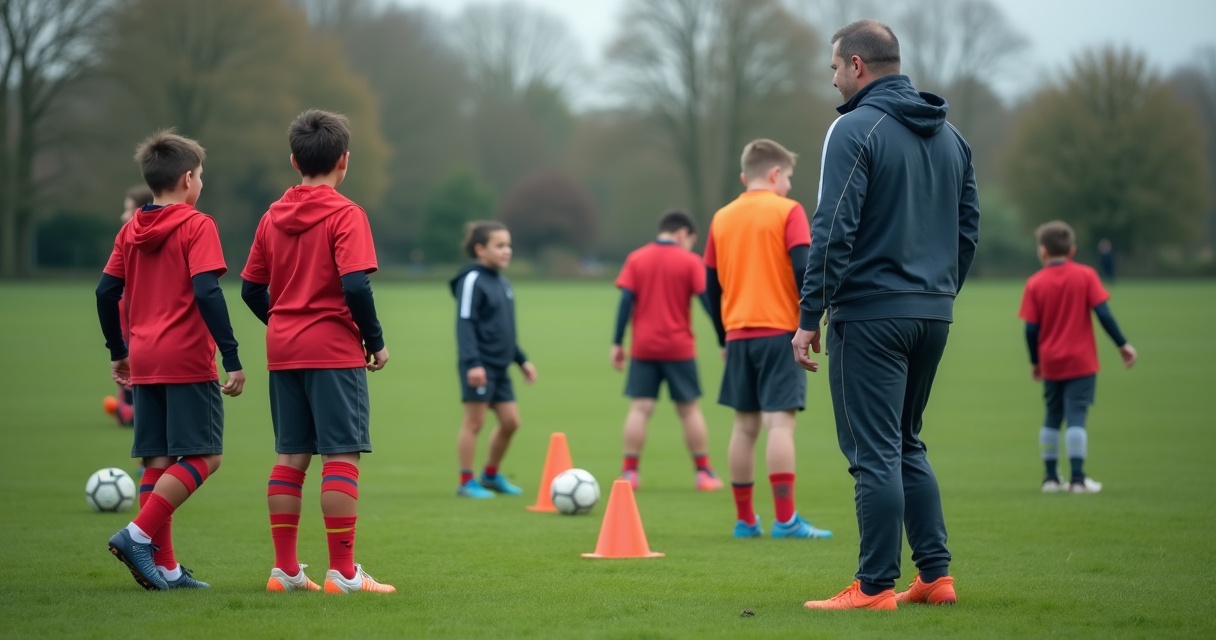
A football training session with 8 players gives every child maximum touches and decisions. Here's how to structure it and what to coach.
Low turnout is one of the most common frustrations for grassroots coaches. Eight players is not a problem — it is actually an opportunity. Small groups mean more touches per player, more decisions per minute, and more meaningful coaching conversations. Here is how to structure a session that works with eight.
Why Eight Is Actually a Good Number
In a full squad session, players spend a lot of time waiting — in lines, rotating out, watching. With eight players, nobody waits. Every player is active for almost the entire session. Research consistently shows that time-on-task is the biggest predictor of technical development in youth football. Eight players gives you maximum time-on-task.
Structure for an 8-Player Session
Warm-up (10 minutes): 4v4 rondo
Set up a 12x12 metre grid. Four players try to keep the ball from the other four. No goalkeeper, no goals — just keep possession. Rotate every three minutes. This is technically demanding and players tend to love it because everyone is involved constantly.
Main activity (20 minutes): 2v2+2 possession
Set up two small goals (cones or flat markers) at either end of a 20x15 metre area. Two teams of two play against each other. The remaining four players act as neutrals, one stationed on each sideline. Neutrals always play with the team in possession. This creates constant overloads and forces players in possession to find the spare player quickly.
Coaching focus: scanning before receiving, body shape open to the pitch.
Game (15 minutes): 4v4
Full 4v4 game. Keep the pitch small (25x18 metres). Let them play with minimal interruption. If you want to intervene, freeze the game, ask one question, restart.
Common Adjustments
If you have uneven numbers, play one floating neutral who always joins the team without the ball. If energy drops, shrink the pitch — smaller spaces create more urgency and more touches automatically.
Ready-Made Plans for Small Groups
PlayTactiq includes age-group session plans designed for real-world squad sizes, including weeks where turnout is low. Every plan comes with animated drill diagrams so you can visualise the setup before you get to the pitch.
See all session plans at playtactiq.com/explore.
What to Coach When Numbers Are Low
Small sessions are where technical habits actually form. With eight players you have fewer distractions, which means you can hold a coaching point longer without losing the group. Pick one or two themes per session rather than trying to cover everything. Good choices for an 8-player session include:
- Receiving on the back foot — the grid is tight, so every first touch matters
- Scanning before the ball arrives — with fewer players there is nowhere to hide poor habits
- Decision speed in tight areas — 4v4 and 2v2+2 create pressure that mirrors a real match
Resist the urge to over-coach. Let patterns repeat two or three times before you stop play. Children need repetition to make a habit automatic, and a quiet game often teaches more than a lecture.
Pitch Sizes Matter More Than You Think
With eight players, the dimensions you choose will shape everything that happens. Too large and children jog, touches drop, and the session loses intensity. Too small and it becomes a scramble with no time to think. A rough guide:
| Activity | Recommended Size |
|---|---|
| 4v4 rondo warm-up | 12 x 12 m |
| 2v2+2 possession | 20 x 15 m |
| 4v4 game | 25 x 18 m |
If the session feels too easy, shrink the pitch by two metres each side before you change the activity. It is the quickest way to increase the challenge without stopping to explain new rules.
How to Maintain Quality When Energy Dips
Low turnout sometimes means low energy — a cold Tuesday evening, a long school day, tired legs. A few things that help without killing the session:
- Cut rest periods short but make them real. A proper 60-second water break is better than endless slow-walking between activities.
- Compete in short bursts. Score the rondo. Count consecutive passes in the possession phase. Competition wakes players up faster than any motivational speech.
- Change the constraint, not the drill. If the possession exercise is dragging, add a rule that neutrals can only use one touch. Same session, fresh challenge.
Talking to Parents About Low Turnout
A few coaches find it useful to reframe the 8-player session for parents who apologise for 'only' eight showing up. A simple line like 'smaller tonight, more touches for everyone' shifts the mood before you even start. Children pick up on adult energy, so settling that early helps.
Planning Ahead for Variable Numbers
If your squad regularly fluctuates between 8 and 14, it is worth having a session template that scales cleanly. The 2v2+2 format above extends naturally into 3v3+3 with twelve players, with no change to the coaching theme or pitch size. Building your plans around formats that scale means you arrive confident whatever the turnout.
PlayTactiq's session library includes plans built for real grassroots squad sizes, with animated diagrams you can check on your phone before kick-off.
Written and reviewed by the PlayTactiq Coaching Team
Practical guidance for grassroots coaches, shaped around age-appropriate sessions, clear coaching language and real match-day problems.
Put it into a session
Ready-to-run session plans by age group
Setup, animated diagrams, coaching points and player-number adaptations, from U6 through to U18.
Browse session plans by age group →