
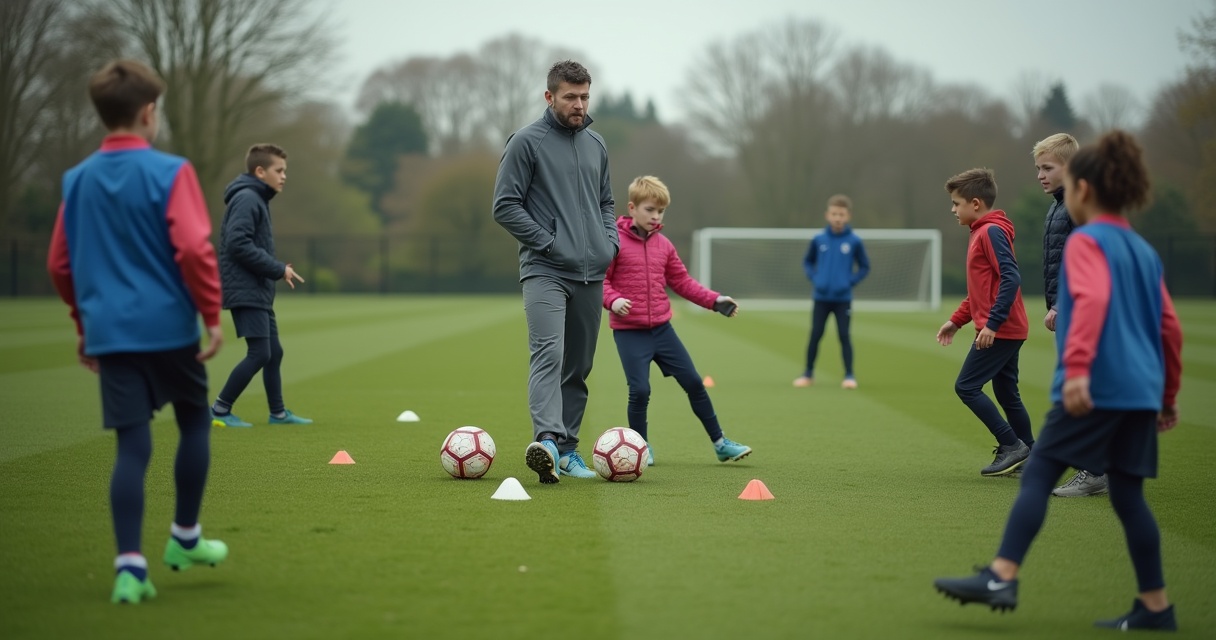
Teach young players to stay calm and keep possession when opponents press. Master this essential skill with proven drills designed for U10 grassroots coach
One of the most transformative skills you can teach young footballers is how to maintain composure when defending the ball under pressure. At U10, players are discovering that keeping possession isn't just about moving the ball—it's about controlling emotions, making quick decisions, and executing with precision even when opponents are closing them down.
Young players naturally panic when pressed. They rush passes, hold the ball too long, or make careless touches that invite turnovers. Teaching them to stay calm under pressure changes everything. Composed players make better decisions, transition more smoothly from defence to attack, and become genuinely reliable team members. This week's focus is simple: help your players recognise incoming pressure, respond with clarity, and execute accurate passes consistently.
Why Possession Under Pressure Matters at U10
At grassroots level, possession under pressure separates confident young players from those who freeze when challenged. When your team can keep the ball calmly while being pressed, you reduce defensive risk and create natural attacking opportunities. More importantly, you build mental resilience that transfers to match situations where pressure is constant.
This isn't about playing slowly or defensively. Staying calm means controlling your emotions and thinking clearly under stress. It means recognising passing options quickly, selecting the right one, and executing it cleanly—all in the space of two touches. Young players who develop this skill become the spine of their team: reliable in possession, composed in transition, and confident when things intensify.
The coaching principle is fundamental: composure creates better decisions, and better decisions create better outcomes. By regularly practising possession in pressured situations, your players learn that rushing rarely helps. Instead, they develop awareness, technique, and the mental toughness to stay focused when intensity rises.
The Three-Zone Possession Drill
This practice is built around a simple structure that lets you scale difficulty while keeping the challenge meaningful.
Setup: Divide a 40x30 yard area into three 10-yard wide columns. You'll need 12-14 players total: 8-10 in possession (split into two teams of 4-5), and 2-3 pressuring defenders. Each team stays in their designated zone and attempts to complete 5 consecutive passes while keeping the ball away from one assigned defender. Once they complete 5 passes, they move into an adjacent zone for 10 seconds to reset, then return to their starting zone.
Rotation: When possession is lost, swap defenders and attackers. This keeps everyone engaged and ensures all players experience both roles.
Duration: Run this for 4-minute blocks with 90-second rest periods. This creates realistic intensity and recovery patterns that build fitness alongside skill.
Coaching Cues That Stick
Use these simple, repeatable phrases during the drill:
- 'Check your shoulders before receiving'—This teaches awareness of where pressure is coming from.
- 'Pass early, don't wait for pressure'—Encourages proactive decision-making rather than reactive scrambling.
- 'Keep your head up'—Reinforces scanning for passing options throughout possession.
- 'One or two touches maximum'—Develops technique and prevents holding the ball too long.
- 'Communicate—call for the ball'—Builds team cohesion and reduces hesitation.
Repeat these cues consistently. Young players learn through repetition, and consistent language helps them internalise the principles you're teaching.
Progression 1: Double Pressure
Once your players are comfortable with one defender, add a second. Now they must complete 5 passes with two opponents closing them down simultaneously. This forces quicker decision-making and teaches awareness of multiple pressure points. Players learn to scan wider and understand that support comes from different angles. The intensity increases noticeably, but if you've built the foundation correctly, most U10 players can adapt quickly.
Progression 2: The Safe Zone
Introduce a 5-yard zone in the middle where one player can stand without being challenged. The team must move the ball to this player strategically, adding tactical depth. Now your players must think about shape and positioning, not just passing. This progression bridges the gap between simple passing drills and real match scenarios where positioning creates passing lanes.
Progression 3: Free Movement with Consequences
Allow players to move freely across all three zones, but they lose a point if the ball leaves the playing area. This combines possession awareness with spatial awareness and forces players to stay composed even when space opens up. It's closer to realistic match play and tests whether your coaching has genuinely developed their decision-making.
What Happens Next
Drills like this work because they create pressure in a controlled environment. Your players can experiment, fail safely, and learn from mistakes without the emotional weight of a competitive match. Over time, this builds genuine confidence. When pressure arrives in actual play, it feels familiar rather than overwhelming.
The goal isn't to create robot-like passers who never take risks. It's to develop young players who understand that clear thinking beats panic, who recognise their options before trouble arrives, and who can execute basic skills accurately under stress. That foundation prepares them for competitive football at any level.
Start with one defender. Add complexity as your group improves. Use consistent language. Celebrate composure, not just successful passes. Within a few weeks, you'll notice a real shift in how your players handle pressure—on the pitch and beyond.
Written and reviewed by the PlayTactiq Coaching Team
Practical guidance for grassroots coaches, shaped around age-appropriate sessions, clear coaching language and real match-day problems.
Put it into a session
Ready-to-run U10 session plans
Setup, animated diagrams, coaching points and player-number adaptations — every U10 session in one place.
U10 football session plans →