
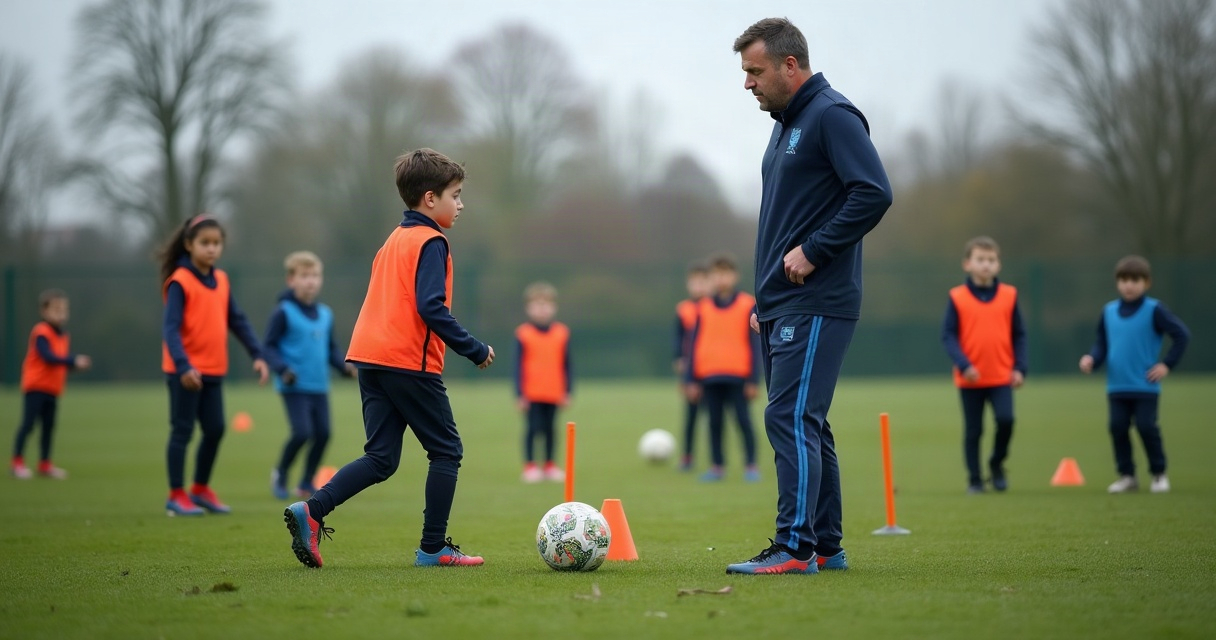
Prevent costly mistakes in U8 defending sessions with practical fixes. Prioritize fun, confidence, and quick decision-making.
Mistake 1: Overcomplicating Drills
U8 players thrive on simplicity and repetition. Coaches often introduce too many rules or technical terms, which slows engagement and confuses young minds. Instead, structure drills around one clear objective per session, like ‘steal the ball with your feet’ or ‘protect the cone at all costs.’ Keep instructions short and use visual examples to avoid unnecessary verbal overload. Quick Feet: Win It Back Fast offers an ideal template for this.
Clarity breeds confidence. If players understand only one goal at a time, they focus better and take risks. For example, in a 1v1 scenario, shout a single directive like “get it to the end cone” before allowing them to experiment. Avoid correcting every small error mid-drill; let them learn through trial and error. Save feedback for the end of each round to keep the ball moving and energy high.
Balance action with reflection. After 5–6 minutes of active play, gather players to ask open-ended questions like, “What helped you win it back fastest?” This reinforces learning without stifling creativity. Overloading sessions with theory kills the joy of play and distracts from the physical experience children crave.
Mistake 2: Forgetting to Recover
It’s tempting to reset drills when the ball goes out or a mistake happens, but this creates gaps in engagement. U8 players learn best through constant action. If a defender loses the ball but immediately chases it, praise the effort. If the ball rolls into a tight space, ask a nearby player to help clear it and keep the game alive. Every interruption breaks the rhythm and robs children of decision-making practice.
Recoveries also teach resilience. When a drill goes sideways, model how to adapt. For instance, if a passer’s cross veers off-target, use it as a chance to shout, “Can you get it back to your team in three touches?” This turns an error into a problem-solving moment. The goal is to normalise quick, calm adjustments so children see mistakes as part of the process.
Minimising downtime ensures all players stay involved mentally and physically. A 30-second reset between rounds might save time in the moment, but it trains kids to expect a break when challenged. Instead, find ways to restart fluidly. If the ball is lost, have a nearby coach or older player return it instantly to restart the action.
Mistake 3: Ignoring the Power of Confidence
Defending feels risky for young players. If a child hesitates or overcommits and fails, the instinct is to offer reassurance like, “It’s okay, try again.” But these phrases can imply they’ve done something wrong. Instead, celebrate attempts with positive reinforcement. If a player charges too soon and loses the ball, cheer their initiative: “You went for it! Let’s test your speed next time.”
Frame mistakes as discoveries. Replace “Don’t do that” with questions like, “What might happen if you wait a second before moving?” This shifts their mindset from avoiding failure to experimenting. Children who feel safe to explore take bold, creative risks—key traits for a confident defender.
Body language matters. Squat down to talk directly to the child, maintain eye contact, and avoid overtly correcting their posture or technique. At U8 level, physical accuracy is secondary to confidence and enjoyment. If a defender falls, laugh with them and say, “You’ve got a great first touch! Let’s make it slower next time.” This reinforces effort without stifling progress.
Mistake 4: Underestimating the Fun-Learning Balance
Youth development hinges on the joy of play. Defending drills that feel like tests—where only “correct” actions are praised—create anxiety. If a player avoids their opponent by holding the ball too long, don’t reprimand; instead, ask, “Can you win it back in two seconds?” This challenges them without shames. Make all outcomes positive by tying rewards (e.g., high-fives, cheers) to effort, not just results.
Incorporate play within purpose. Add a simple scoring system where defenders earn points for quick recoveries or creative moves. If a child wins the ball back in five seconds, cheer like it’s a goal. If they hold on to it too long, create a humorous consequence like being “stuck” for 10 seconds to mimic their hesitation. This makes learning memorable without stress.
End sessions with games, not drills. Transition from structured scenarios to a 4v4 or 3v3 game with a rule like, “Win the ball and run it to the cone for a point.” This mimics realistic defending scenarios while giving players freedom to apply their learning in a low-pressure, high-fun setting.
Mistake 5: Letting the Ball Dictate the Session
Children forget skills if they’re only practicing when the ball is with them. At U8, 60–70% of learning happens when the ball isn’t in their hands. Use this “off-ball” time to reinforce positioning. For example, during a 1v1 drill, ask defenders to shout their next move (“I’m stepping back!”) before pressing. This trains verbal communication and spatial awareness between possessions.
Instruct players to stay active even without a ball. During breaks, ask them to jog between cones in a “zig-zag” pattern or mimic a defender’s slide move. This builds muscle memory and keeps the session dynamic. Avoid letting players congregate in large groups, which reduces individual engagement and increases waiting times.
Use peer learning. Pair a confident defender with a slower thinker and have them mimic each other’s movements for short bursts. This creates instant visual reminders without over-directing. Off-ball activity ensures every child remains involved and reduces frustration from idle waiting.
Mistake 6: Skimping on Clear Feedback
U8 players need feedback that’s immediate, simple, and actionable. Instead of vague praise like “Good job,” link it to their actions: “You stayed on your toes when you won it back—let’s try to stay there more.” Pair this with a physical reminder, like tapping your foot, to anchor the learning. Avoid long explanations; keep insights under three sentences to match their attention span.
Use group feedback to reinforce learning. After a round, gather players and ask, “What one thing could we do faster next time?” This encourages collective problem-solving. If the group identifies “moving closer to the ball,” use this to adjust the next drill on the fly. Let children suggest improvements, which fosters ownership of their progress.
End with a collective goal. Shout something like, “Let’s all try to win it back before the 10th step!” before the next round. This gives a shared challenge and keeps the session playful. Consistent, clear feedback ensures children leave with a sense of achievement—whether they won the ball or simply tried harder.
Written and reviewed by the PlayTactiq Coaching Team
Practical guidance for grassroots coaches, shaped around age-appropriate sessions, clear coaching language and real match-day problems.
Put it into a session
Ready-to-run U8 session plans
Setup, animated diagrams, coaching points and player-number adaptations — every U8 session in one place.
U8 football session plans →