
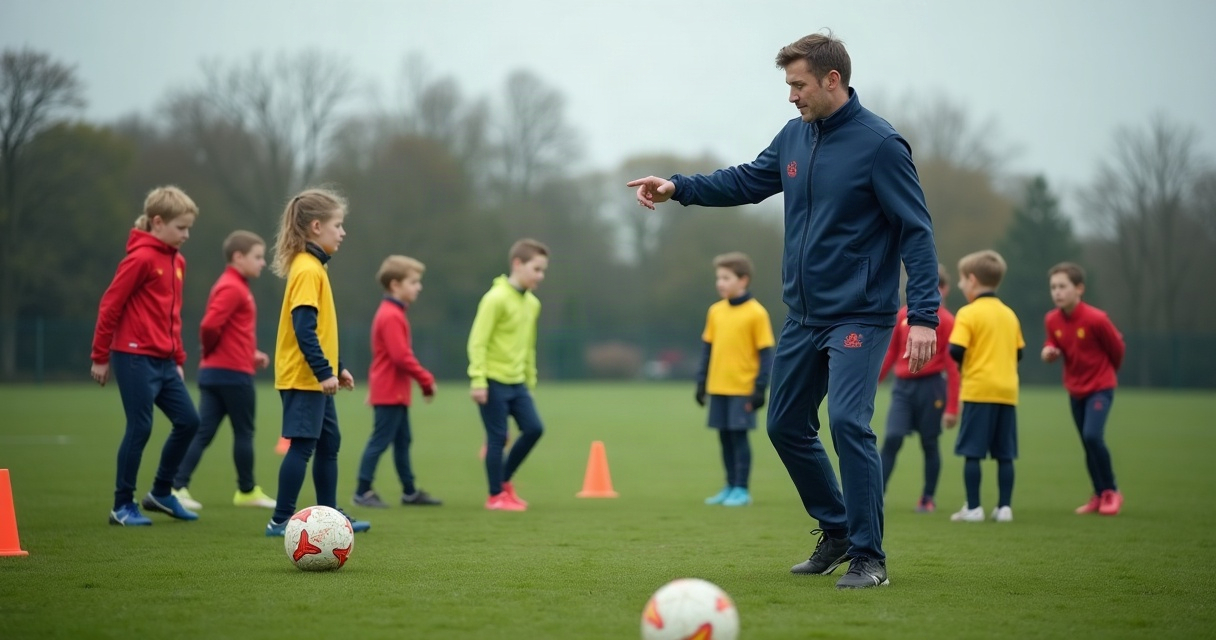
Prevent common U14 finishing errors with these practical fixes.
Overcomplicating Positioning Drills
Coaches often overload U14 sessions with rigid instructions about where to stand, stifling creativity. Instead, use 4v3 small-sided games in the penalty area to let players discover natural positioning. Introduce cones to mark potential running lanes but avoid dictating exact spots. This encourages children to read the play and make independent decisions. The Penalty Area Mastery: Timing Your Striker Runs session provides a framework for this approach.
Too many positional rules can overwhelm young strikers, reducing their confidence to move. Keep drills dynamic: alternate between 3v2 and 4v3 scenarios, rewarding creative runs rather than fixed patterns. Use verbal prompts like Look up at the ball or Run to space—don’t follow teammates to guide without restricting. Rotation ensures all players have turns, limiting downtime and maintaining engagement.
A well-timed run feels like a small triumph. Celebrate when a child reaches a post or cuts in from a width, even if contact isn’t made. This builds mental resilience and reinforces the habit of scanning for gaps in the defense. The goal isn’t perfection; it’s fostering the instinct to commit early to dangerous runs.
Neglecting Repetition Without Fatigue
Repetition is vital for U14 finishing, but static drills where players wait for their turn quickly bore and tire. Replace 1v0 penalty kicks with rotating 2v1 drills using a grid system. Every 30 seconds, pairs swap roles to ensure constant action. This keeps legs moving and reduces the anxiety of waiting in line for a shot.
Use cones to create zones where attackers must dribble before shooting, adding variety. Rotate players every 45 seconds to prevent fatigue while maintaining intensity. The key is to balance rhythm in the drill with enough variety to hold attention. Incorporate passing before shooting: e.g., 1st touch to a teammate, then strike. This simulates match-like decisions and builds anticipation.
Track progress through positive feedback. Note when a child improves their shot placement or adjusts their run after advice. Celebrate incremental wins, like a better follow-through or a higher success rate after rotation. The U14 Finishing Collection offers additional low-fatigue drill ideas.
Ignoring Different Attack Scenarios
Focusing solely on one-on-one situations limits a striker’s adaptability. Vary attacks by simulating crosses, cut-backs, and overlapping runs. Set up a 40x30-yard area with attackers starting in wide positions. Defenders must close down after a 5-second delay to simulate defensive pressure in a real match. This trains strikers to adjust their body position and decision-making mid-rush.
Include defenders in the loop to promote defensive awareness. For example, after an attacker shoots, they rotate into defense, learning to apply pressure immediately. This holistic approach mirrors match demands and prevents players from developing a narrow view of attack situations. Use a soft ball for safety, and rotate attackers every 90 seconds to keep energy high.
Scenarios like a defender rushing out for a short corner require quick reactions. Introduce these gradually, using cones to mark key positions. For instance, Striker must run to the post before the goalkeeper arrives. This sharpens spatial awareness and timing without overloading technical complexity.
Overloading with Technical Demands
Telling U14s to always strike with the laces or chase a specific foot can drain confidence. Replace rigid instruction with guided discovery. Instead of correcting a bent-knee follow-through, ask What happens if your knee is straight after contact?. This turns mistakes into learning opportunities and empowers children to experiment safely.
Focus on the why behind adjustments. If a child’s shot curls, link it to body alignment: Try shifting your weight fully forward. This contextual feedback helps players connect mechanics to outcomes without feeling criticized. Incorporate mini-games where successful shots earn points, but only if the player explains their technique choice.
Use peer modeling: after a child demonstrates a well-timed run or a crisp finish, ask them to coach a teammate. This reinforces their own learning while building camaraderie. The goal is for players to internalize principles like commit fast or look before you run, not to master every technical detail.
Rushing Decision-Making
U14s often freeze under pressure, hesitating at the goal line. Slow drills down by adding deliberate pauses. For example, in a 2v1, require attackers to stop for 3 seconds after receiving the pass to simulate goalkeeper or defender movement. This trains them to scan for gaps before committing their run.
Incorporate yes/no scenarios to build decision-making muscle. Ask questions like Will running to the near post be better here? and No, the ball’s at the edge. What’s next?. This scaffolds critical thinking without overwhelming young minds. Use color-coded cones (e.g., green for safe shot, red for danger zone) to simplify complex choices.
Gradually reduce guided pauses to increase intensity. Start with 5-second stops, then cut to 3 seconds after the group shows confidence. Always pair this with verbal encouragement: I see you adjusting to the ball’s position. How does that feel? Affirming their progress builds trust in their instincts.
Missing the Link to Confidence-Building
Confidence comes from consistent small wins, not perfection. Avoid highlighting every error; instead, isolate one or two key improvements each session. If a child improves their positioning 20% but their finishing remains rough, praise the positioning win: Your run to the far post was earlier today—well done!.
Use low-pressure games like 5v5 in the final third where the focus is on creating chance after chance, not scoring goals. Introduce rules like Only 2 touches before shooting to force decisiveness. A player who scores under these rules feels justified in their boldness, reinforcing risk-taking as a positive trait.
End sessions with a confidence boost round. Let players pick a favorite drill to revisit with a partner. This autonomy boosts ownership of their development. Remind them that finishing is a journey of small adjustments, not an instant skill. The U14 Finishing Collection holds session plans to help embed this approach long-term.
Written and reviewed by the PlayTactiq Coaching Team
Practical guidance for grassroots coaches, shaped around age-appropriate sessions, clear coaching language and real match-day problems.
Put it into a session
Ready-to-run U13 and U14 session plans
Setup, animated diagrams, coaching points and player-number adaptations — every U13 and U14 session in one place.
U13 and U14 football session plans →