
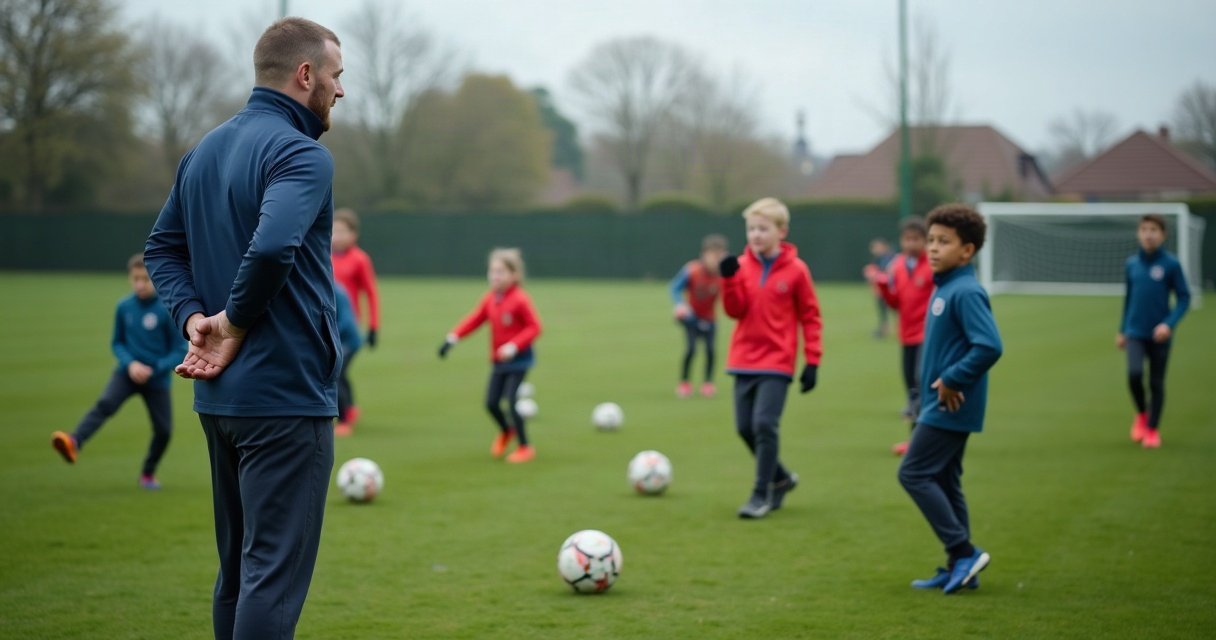
Teach children to trust their instincts and stay calm in front of goal with structured, inclusive drills.
The Foundation of Finishing
Confidence and composure are the cornerstones of effective finishing at U9 level. Young players often rush shots due to excitement or fear of missing, which disrupts technical execution. Coaches should create drills that allow kids to experience success through deliberate repetition, building trust in their ability to score. For example, set up a penalty box scenario where players track balls rolled to them by a coach or peer, encouraging short, controlled runs and quick decision-making. Emphasise eye contact with the ball at contact and celebrating every effort to reinforce positive habits. By focusing on small, achievable goals (e.g., 'hit the post' or 'connect with the toe'), you reduce pressure and help children associate finishing with fun and progress.
Inclusion is key to nurturing confidence. Ensure every child receives the same quality of guidance and praise by rotating roles (e.g., striker, server). For instance, pair less-assertive players with peers who model calm body language, such as keeping feet still after scoring to celebrate. If waiting times are unavoidable, use this time for low-pressure shooting games using soft small-sided goals. The aim is to normalise scoring opportunities as part of the process, not the pressure. This approach aligns with the Timing Your Run: Penalty Area Movement session, which prioritises timing over power to teach spatial awareness during runs into the box.
Movement Patterns for Composure
Composure is developed through predictable movement. In the Timing Your Run: Penalty Area Movement session, players learn to read the ball’s trajectory and time their sprints into the penalty area. This is not just about running fast, but timing cuts and decelerations to meet the ball at its peak. A variation is to have a coach roll the ball from the side to a line of players, each taking turns to run, stop, and shoot using their weaker foot. This forces mental focus on balance and technique, reducing fumbling caused by rushed movements.
To embed this further, split players into pairs and have one server feed the ball at a steady pace to their partner. The striker must wait until the ball is within a 1m x 1m zone before accelerating to finish. Pigeonholing the scoring area (e.g., corners of the goal) adds structure without increasing pressure. This drill mirrors real-game scenarios where composure separates confident finishers from anxious takers. Adjust speeds and distances for abilities, ensuring all children engage with the ball actively rather than watching.
Building Trust Through Repetition
Repetition is a tool for building trust—both in the player’s technique and their coach’s intent. Set up weekly 'penalty box sprints' where players complete sets of five shots, aiming to improve their 'good contact' count each round. Use visual feedback like mini target nets or painted zones to make progress tangible. Celebrate improvements (even from one to two better touches), and encourage peer feedback to create a collaborative environment. This fosters a mindset of continuous learning rather than one-time performances.
Another method is to play a 4v4 game with modified rules: any player who scores on the first touch earns a point. This rewards composure and quick decision-making without penalising mistakes. Coaches can gently nudge players away from overthinking by praising 'brave steps forward' or 'calm feet after the ball'. Over time, these phrases become part of the players’ internal dialogue, helping them trust their training during games. For players who struggle with self-doubt, pair them with a 'quiet leader' who models patience and concentration.
Inclusion Through Creative Adaptation
Adapt drills to ensure every child feels capable of making progress. For example, use larger shooting targets (like hula hoops) for younger or less-experienced players, allowing them to score with less precision while learning to track the ball. In 3v3 finishing games, rotate teams often and assign 'helper' roles where players can contribute without the pressure of scoring (e.g., retrieving balls for a peer to shoot). This maintains engagement and normalises support as part of the team dynamic.
To reinforce confidence beyond the session, integrate 'scoring stories' into your warm-ups: ask players to describe a time they made a good contact, no matter how small. This builds self-awareness of their capabilities. Pair this with low-stakes challenges like 'see how many goals you can score in five minutes by keeping your head up' to make practice feel like play. By consistently linking action to affirmation, you help children internalise the mindset that finishing is a skill they can own and improve through effort.
For more drills and progression steps tailored to U9 finishing, explore the U9 Finishing collection. These resources provide structured, inclusive exercises to help players thrive under game-like conditions.
Written and reviewed by the PlayTactiq Coaching Team
Practical guidance for grassroots coaches, shaped around age-appropriate sessions, clear coaching language and real match-day problems.
Put it into a session
Ready-to-run U9 session plans
Setup, animated diagrams, coaching points and player-number adaptations — every U9 session in one place.
U9 football session plans →