
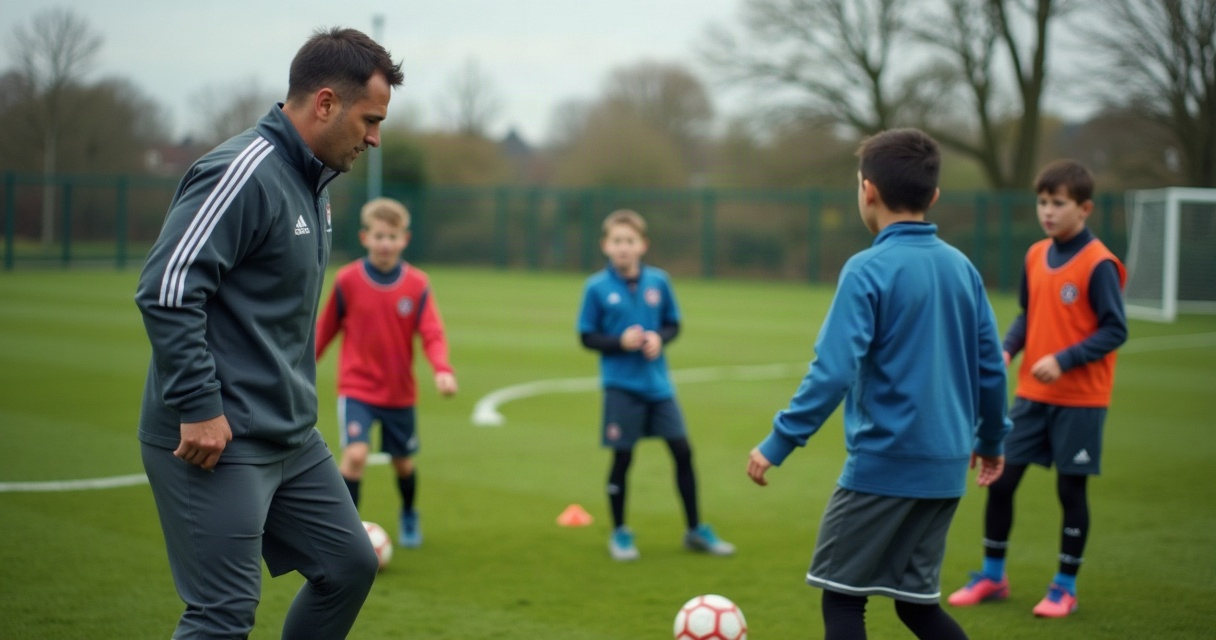
Teach U9s to finish decisively on first touch with confidence-building drills. Link first-time strikes to timing runs in our Penalty Area Mastery session.
The Power of the First Touch at U9
At the U9 stage, children thrive on immediate success and the thrill of making decisive choices under pressure. First-time finishing—striking the ball cleanly on the first touch without adjusting—builds confidence by rewarding quick thinking and physical control. Unlike repetitive shooting drills, this approach mirrors real-game situations where delays often lead to missed opportunities. By focusing on compact, high-intensity activities with frequent ball contact, coaches can nurture a generation of players who trust their instincts and embrace creativity. This principle aligns perfectly with our Penalty Area Mastery: Timing Your Striker Runs session, which ties sharp movement patterns to instant decision-making in dangerous areas.
First-time finishing also fosters inclusion by ensuring every child handles the ball often and engages fully. Smaller playing areas, reduced player numbers, and clear success criteria (e.g., scoring without a second touch) keep players focused and excited. Coaches should prioritise drills that allow children to 'fail forward'—encouraging risk-taking by praising effort, even if the final strike isn't perfect. Over time, this mindset reduces hesitation and cultivates resilient finishers.
Foundational Drills: Quick Thinking Without Hesitation
A simple yet effective drill to introduce first-time finishing is Quick Shot Circle. Set up two small 10m circles side by side, each with a ball wall made of 10–15 cones. Four players per circle receive a pass from a coach or helper positioned at the top. The goal is to strike the ball into a target—like a mini goal or tape on a wall—straight from the touch, with no second attempts. Rotate players every 90 seconds to ensure frequent ball contact.
The beauty of this activity lies in its simplicity and adaptability. Coaches can introduce variations, such as alternating foot usage or directing finishers to aim for different target zones. Key coaching cues include 'stay close', 'strike through the ball' and 'look for the big space'. Encourage players to celebrate small wins, like redirecting the ball from a weak initial touch, to reinforce positive habits. If a player misses, the ball immediately goes to another participant so no one is left waiting. This keeps energy levels high and learning focused.
Integrating Timing and Movement: The Link to Striker Runs
First-time finishing doesn't happen in isolation. To connect this skill to game intelligence, use a drill like Timing Triangle. Set up three cones in a triangle formation within the penalty area. On the coach’s whistle, one player dashes toward the middle cone, receiving a pass. The ball must be played first-time into the far corner of a mini goal. A second player starts at the opposite cone, sprinting to receive a second pass aimed at the 'hot' side. This creates a natural flow between timing runs and instant execution.
This drill mirrors the Timing Your Striker Runs session by embedding spatial awareness and communication. Coaches should teach players to signal readiness with a hand raise or verbal cue (e.g., 'I’m free!') before making a run. This builds trust between attackers and midfielders, which is critical for U9 development. Use a soft-throw ball to keep passes accurate and consistent. As confidence grows, add a third player to simulate real-team interactions. Remember to rotate roles so every child experiences being the striker, the passer and the supporting attacker.
Game Situations: First-Time Finishers in Action
To consolidate these skills, small-sided games with specific constraints work wonders. Try First Touch Frenzy: a 4v4 game in a 10x15m grid where scoring requires a first-time finish. If a team scores with a second touch, the opponent gets the ball with a free kick instead. This encourages immediate decision-making and rewards creative solutions like dummies and step-overs to open up space.
To ensure inclusion, rotate players into different positions throughout the game. A regular striker might play in midfield for a session, forcing them to read situations from a new perspective. Use visual aids, like tape on the ground to mark passing lanes, to simplify complex concepts. The focus remains on fun and growth, not individual blame or technical perfection. When a player makes a good first-time play, pause briefly to highlight it as a collective achievement. This builds team cohesion and reinforces the value of quick thinking.
Confident Finishers Through Repetition and Trust
First-time finishing at U9 isn’t about technical perfection but creating a culture of confidence. By prioritising drills with high ball contact, clear success criteria and minimal waiting, coaches can nurture players who are unafraid of taking risks. The combination of Quick Shot Circle for technical repetition and Timing Triangle for movement-pattern linking provides a strong foundation for future skill development.
Explore our Penalty Area Mastery: Timing Your Striker Runs session to deepen this learning with on-field movement exercises. For more U9 finishing ideas, visit our U9 Finishing Collection. Remember, the most effective coaches are those who listen to their players, adapt swiftly and celebrate every step forward—no matter how small.
Written and reviewed by the PlayTactiq Coaching Team
Practical guidance for grassroots coaches, shaped around age-appropriate sessions, clear coaching language and real match-day problems.
Put it into a session
Ready-to-run U9 session plans
Setup, animated diagrams, coaching points and player-number adaptations — every U9 session in one place.
U9 football session plans →