
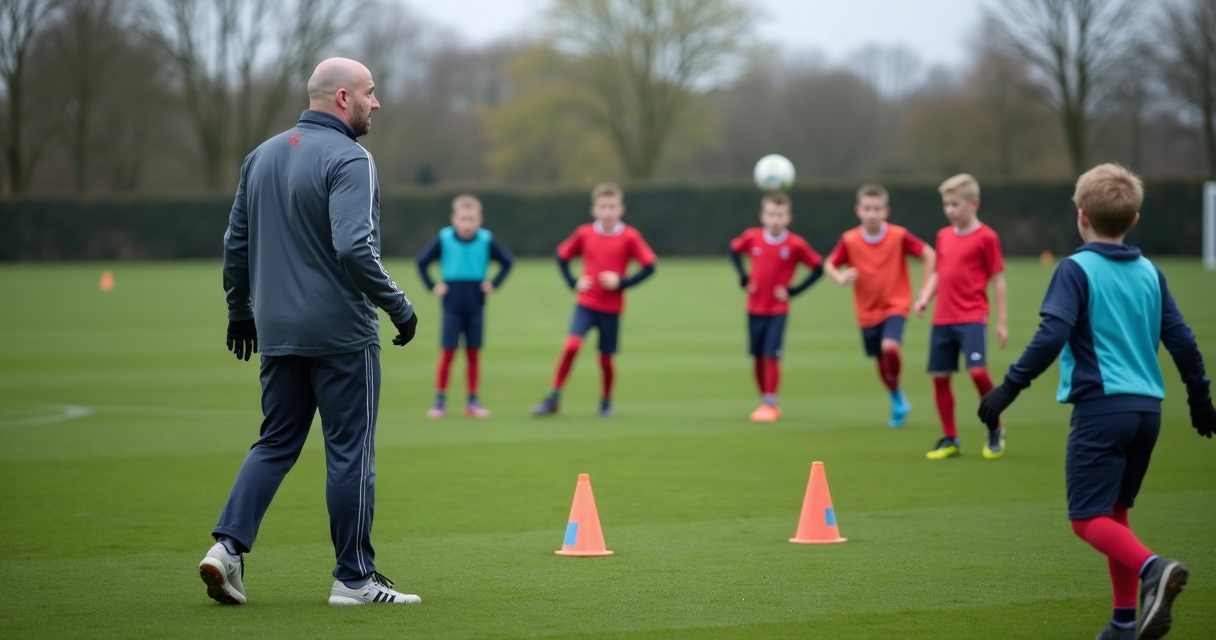
How to coach heading at U10 so every child feels safe to try, builds real confidence, and wants to go for the ball.
Why the Air Is Worth Winning
When a ball goes high, a lot of young players simply stop. They step back, watch it land, and carry on as if that moment in the air belonged to someone else. That is completely natural—heading is the one skill in football that asks children to move toward something coming at their face, and that takes a particular kind of courage that ground-based skills don't demand.
The good news is that courage in the air is not a personality trait some children are born with. It is built through small, repeated successes in a safe setting. The moment a child heads a soft, slow ball cleanly and feels it work, something shifts. They want to do it again. That is where confidence comes from—not from being told heading is fine, but from discovering it themselves.
At U10, children are ready for this. Their coordination is improving, they can track moving objects with growing reliability, and they respond brilliantly to challenges that feel fair and fun. Heading sessions at this age do not need to be complicated. They need to be frequent, low-pressure, and full of turns.
The Two Things That Make Heading Click
Before any technique conversation, two habits unlock almost everything else.
Seeing the ball early. Children who keep their eyes on the ball from the moment it is released—not just as it arrives—have already solved the hardest part of heading. Early tracking gives the brain time to judge height, pace, and angle, so the body can move to the right place without rushing. Encourage children to watch the ball leave the thrower's hands and follow it all the way in. Praise this specifically: 'You picked that ball up early—that's why you were in the perfect spot.' Specific praise sticks far better than general encouragement.
Choosing when to go. Some children will head everything within reach; others will hesitate and leave every ball. Neither habit is a problem in itself—the aim is to help children feel they have a genuine choice. When they decide to go for a header, even an imperfect one, they are exercising judgement. Ask them about it afterward: 'What made you decide to go for that one?' That question tells them their decision mattered, which makes them more likely to decide confidently next time.
These two ideas sit at the heart of the Head High: Attack, Defend and Win the Air practice, and they are worth returning to throughout the session rather than just mentioning once at the start.
Keeping Everyone Involved and Feeling Safe
Heading sessions fail most often not because of poor technique coaching but because children spend too long waiting, watching confident peers, and feeling more uncertain by the minute. The fix is straightforward: small groups, quick rotations, and every child getting the ball often.
Work in pairs or groups of no more than four to six. Keep the ball soft and bouncy—foam balls and lightweight training balls remove the fear of contact and let children focus on timing rather than bracing themselves. Keep throws low and gentle at first, from close distance, so the ball is easy to read and the chance of success is high. Early success is the most powerful coaching tool available.
For children who are not ready to head, give them a role that keeps them active and valued. Let them throw the ball for a partner, call out a target direction, or act as a 'scorer' counting clean contacts. When they see heading done gently and safely, and when they feel no pressure to join in before they are ready, most children will choose to try. That choice is enormously more powerful than being pushed.
Foam or beach balls are genuinely useful for anxious children. The softer contact feels completely different, and a few rounds with a lighter ball often provide exactly the confidence needed to try with a standard training ball. Keep these available quietly, without drawing attention to who is using them.
What Good Heading Looks Like at This Age
At U10, the goal is not textbook technique. The goal is a child who goes for the ball, makes contact somewhere reasonable, and feels good about having tried. From that foundation, technique improves naturally with repetition.
That said, there are a few simple things worth noticing and gently encouraging:
- Eyes open through contact. Children who close their eyes just before heading often miss the ball or make contact awkwardly. Keeping eyes open is partly habit and partly trust—trust that the ball is going to feel fine. Reward it when you see it.
- Moving toward the ball. A still child waiting for the ball to arrive will always struggle. Encourage small, active steps to get underneath or in front of the ball. Even a single step forward before contact makes a big difference.
- Using the forehead. Young children often try to use the top of their head, which is less comfortable and less controlled. A light, encouraging cue—'Try to hit it with the flat part of your forehead'—is enough at this stage. No long technical explanations during play.
When something goes wrong, resist the urge to stop play and correct. Let the game continue. Offer brief, warm feedback during a natural break: 'That one went a bit wide—where do you think you'll aim next time?' This invites thinking without making a child feel criticised in front of others.
Never compare one child's heading to another's. Never use words that suggest timidity or weakness. These words travel and they stick, and they are the fastest way to ensure a child never goes for a header again.
Taking It Into the Game
Heading practice only matters if children carry it into real play. The bridge between drills and matches is helped enormously by small-sided games where the ball regularly goes into the air—and where coaches celebrate aerial challenges just as loudly as goals.
In a 5v5 or 6v6 game, when a ball goes high, call out encouragement for anyone who moves to challenge for it, regardless of the outcome. 'I saw you going for that—great decision!' reinforces the behaviour more than any instruction. Over time, children stop waiting for the ball to land and start seeing the air as their territory too.
If you are looking for more practices that build confidence and skill across all parts of the game, explore the full session library to find activities suited to your group's age, ability, and goals.
The children who feel brave in the air are not the ones who were told heading is safe. They are the ones who had enough turns, in a warm enough environment, to discover that for themselves.
Written and reviewed by the PlayTactiq Coaching Team
Practical guidance for grassroots coaches, shaped around age-appropriate sessions, clear coaching language and real match-day problems.
Put it into a session
Ready-to-run U10 session plans
Setup, animated diagrams, coaching points and player-number adaptations — every U10 session in one place.
U10 football session plans →