
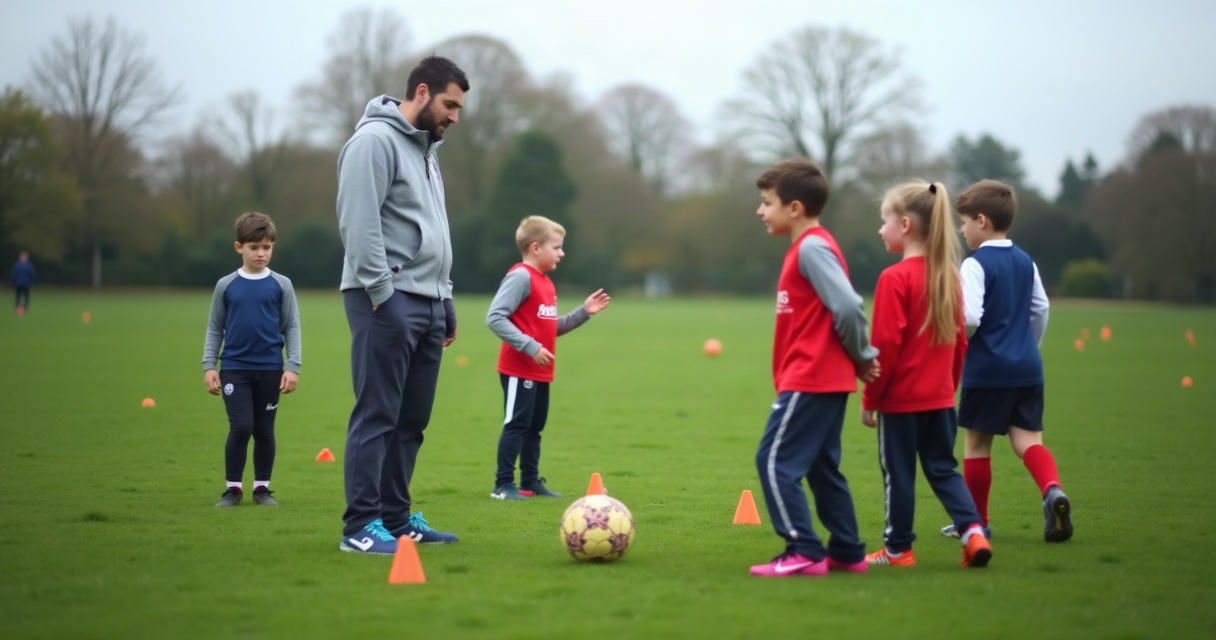
Help your U8s stay calm when someone runs at them with a simple possession game that builds confidence, clever thinking, and lots of touches.
Picture this: a small child gets the ball, a teammate jogs toward them, and their eyes go wide. They boot it straight out of play, look at the ground, and shuffle away. You've seen it a hundred times. The good news is that panic is not a personality trait – it's a habit, and you can gently replace it with a calmer one in a single session.
This possession under pressure session for U8 beginners does exactly that. It gives children a simple puzzle to solve together, lots of turns with the ball, and a genuine reason to feel proud of themselves by the end.
Session at a glance
- Age group: U8 (roughly 6–8 year olds)
- Ability level: Beginner
- Session length: 45–60 minutes including warm-up and a small game
- Players: 6–16 (run two groups of 6–8 side by side)
- Space: One square of roughly 20m × 20m per group, marked with cones
- Equipment: One football per group, cones – nothing else needed
Why children enjoy this game
At this age, football is most enjoyable when children feel clever rather than lost. Possession under pressure is really about two things: knowing where your teammates are before the ball arrives, and having simple choices ready – left, right, or back – so that deciding feels quick and confident rather than frightening.
When a child keeps the ball calmly while someone jogs toward them, they feel brave. When their pass finds a teammate, they feel part of the team. Neither moment requires pace or strength. A quieter child who reads the game and moves early is just as valuable as the loudest one in the group, and this session makes that visible to everyone.
There is very little waiting, every child gets regular turns with the ball, and the scoring is based on passes kept rather than goals scored – so the win belongs to the whole group. That shared ownership is what makes children want to come back.
How to run the session
Set up two groups running at the same time so no one stands around for long. In each group, four children start as keepers inside the square, passing the ball to each other. Two children are gentle pressers – their job is to jog slowly toward whoever has the ball, closing the space just enough to make the keeper think and move the ball quickly.
Be clear with your pressers: jog, do not sprint; no hard challenges, no sliding. Their job is to make teammates think, not to win the ball roughly. A quick word before you start – 'Be a friendly shadow, not a defender' – usually does the trick.
Coaching cues to drop in as the game runs:
- 'Where's your next pass before the ball comes?'
- 'Take a tiny touch, then look.'
- 'Pass before you get rushed – that's being smart.'
Swap keepers and pressers every two minutes so every child experiences both roles. If the ball goes out, you restart it with a calm pass from the side – keep the rhythm going rather than stopping to lecture.
Count passes aloud with the children: 'That's five, six, seven – brilliant.' Celebration is part of the learning.
Keep every child involved
If someone needs a breather, give them the role of friendly ref: they count the passes the keepers make and call it out. They stay connected, feel useful, and come back in refreshed.
For a child who is less confident with the ball, place them next to your most encouraging passer. Easy balls, short distances, immediate success. Confidence grows from repetition, not speeches.
A shy child might actually prefer being a gentle presser first – moving around without the pressure of receiving the ball is a gentler way into the game. Let them find their feet, then invite them into keeping.
For a child who needs more challenge, ask them to be a silent leader: they cannot call for the ball or shout instructions, but they must move into space early so teammates can see them. It teaches awareness without turning them into a bossy presence.
What to notice and say
The most important thing to watch is not whether the pass is perfect – it is whether the child looked up before the ball arrived. That habit of scanning early is worth far more than a tidy first touch at this age.
Try not to stop the game every time something goes wrong. If the ball goes out, restart quietly. If a child panics and hoofs it, just say 'Nice try – next time take that tiny touch first' and move on. Public correction in front of peers shrinks confidence quickly.
Ask the group one or two simple questions during a water break:
- 'When someone runs at you, what's the bravest thing you can do?'
- 'How did you know where to pass before you got the ball?'
Let children answer in their own words. What they say often tells you more about their understanding than anything you can observe from the outside.
Easy ways to adapt it
Fewer numbers or less confidence? Use five keepers and only one gentle presser. Plenty of space, fewer decisions, more success early on.
Ready for more? Add a third presser, or ask keepers to move to a new cone after every three passes. This adds a bit of movement and decision-making without changing the core idea.
Biggest challenge? The ball must visit all four keepers before any player can receive it a second time. Watch the scanning and communication that follows – it is worth seeing.
Limited space or odd numbers? A 15m × 15m square works fine. With five players, use three keepers and two pressers and rotate every 90 seconds.
Common coach questions
What if the pressers just stand still and stop trying? That usually means they feel the role is a bit dull. Give them a small target – 'See if you can touch the ball twice in two minutes' – so they have something to chase without becoming aggressive.
What if a child keeps passing to the same teammate and ignoring others? Do not embarrass them. Quietly suggest they try to find the player who is furthest away next time. Frame it as a challenge, not a correction: 'I wonder if you can find the tricky pass.'
What if the group falls apart and it becomes chaotic? Stop, gather everyone, and shrink the task. Go back to one presser, more space, and slower movement. Chaos usually means the challenge is slightly too big. There is no shame in stepping back – it is just good coaching.
A child who leaves this session feeling a little braver with the ball has had a good day at football, and that is really what this is all about. Try the full session plan here and browse more sessions whenever you need a fresh idea.
Written and reviewed by the PlayTactiq Coaching Team
Practical guidance for grassroots coaches, shaped around age-appropriate sessions, clear coaching language and real match-day problems.
Put it into a session
Ready-to-run U8 session plans
Setup, animated diagrams, coaching points and player-number adaptations — every U8 session in one place.
U8 football session plans →