
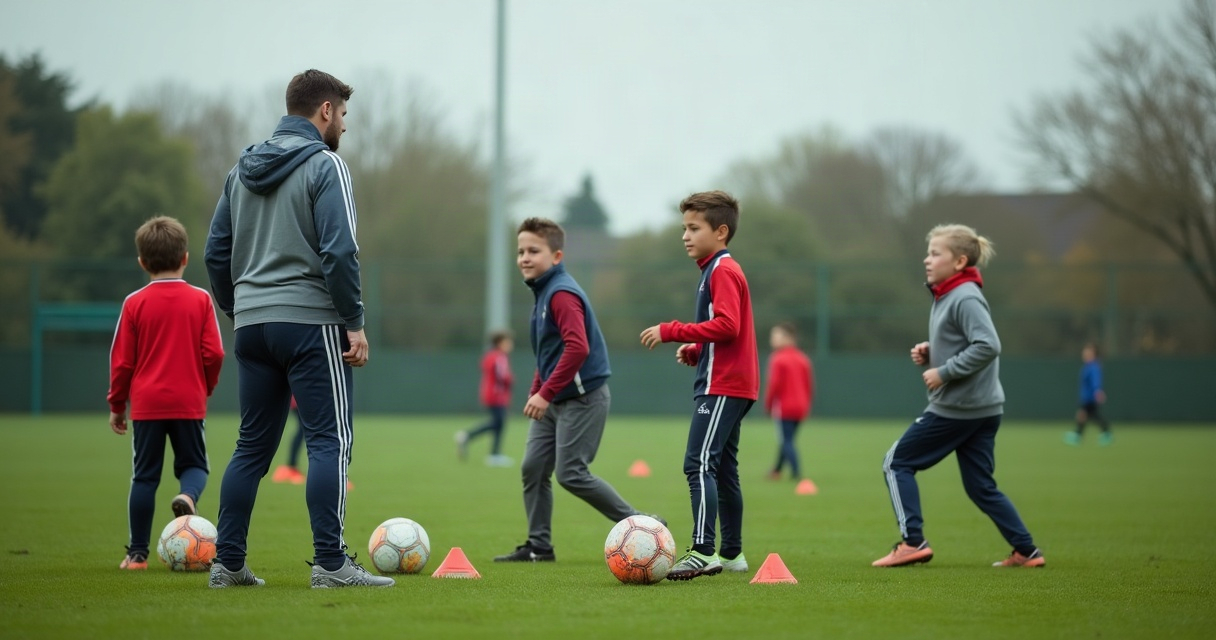
Help your U10s press as a team with a fun hunting game that keeps every child moving, involved, and eager to come back.
It happens in almost every U10 session. One eager player charges towards the ball, their teammates stand and watch, and the other team simply passes around the lone chaser. Nobody means to leave them stranded — it just hasn't clicked yet that pressing only works when friends move together. This session is built around that exact moment, turning it into something children genuinely enjoy.
Session at a glance
- Age group: U10
- Ability level: Intermediate
- Time: 45–60 minutes
- Players: 8–16 (run two grids side by side for larger groups)
- Space: 40 x 30 metres, split into three zones
- Equipment: Bibs, cones, one ball per grid
Why children enjoy this game
Children at this age love a role with a name. Being a 'hunter' rather than a defender changes how they feel about the task — it's active, exciting, and belongs to them. When the group presses together and wins the ball, there's a shared buzz that a solo tackle never produces. Everyone contributed, everyone belongs to the moment.
There's also something quietly important happening for the less confident players. Because the session rewards effort and movement rather than technical brilliance, a child who sprints hard to press but gets beaten is still doing the right thing. That's worth celebrating out loud. It tells every child in the group that trying bravely matters more than being perfect.
First touch matters here too, even in a pressing drill. When hunters win the ball and suddenly become gatherers, they need to control it quickly under pressure. You may well notice — as tends to happen in this age group — that some children instinctively use the sole of the foot to stop the ball dead. That's fine as a starting point, but once they're comfortable with the game, a short side note about meeting the ball with the laces and letting it run with them rather than stopping it completely can land surprisingly well with certain players. Don't force it; just have the cue ready.
How to run the session
Set up: Mark three zones across your grid — a safe zone at each end and a middle hunting ground connecting them.
The game: Split into two teams. One team starts in their safe zone with the ball and must pass it into the middle zone to begin play. The moment the ball enters the middle, the other team — the hunters — press together towards the ball-carrier. The ball-carrier can move freely in the middle zone but cannot retreat to their safe zone. If the hunters win the ball, the roles switch and they must carry or pass it safely back to their own safe zone. If the team in possession complete five passes without losing the ball, they score a point and restart.
Build it gradually:
- First few minutes — no pressing at all, just passing practice so children feel the space
- Introduce one hunter to show how easily a single presser gets bypassed
- Two hunters pressing together — already much harder to escape
- Full team pressing — now children feel the difference their movement makes
That progression isn't just good coaching; it lets children discover the answer themselves rather than being told it.
Keep every child involved
Small teams and a compact grid mean no one stands still for long. If you have 12 or more children, running two grids side by side is far better than one large game where a few players dominate.
For shyer or less confident players, start them as gatherers — the team in possession — where the decision-making pressure is slightly lower. Let them move to the hunter role when they feel ready. You'll often find they ask to swap themselves once they see how much fun the pressing is.
For your more assertive players, give them a quiet personal challenge: can they organise their teammates before pressing rather than just running themselves? Can they press without anything that feels like a foul or a barge? Responsibility tends to focus them.
The 'safe pass' rule is worth keeping in your back pocket too: if a gatherer is heavily pressed and feels stuck, they can pass back into their safe zone without losing possession. It teaches patience under pressure and stops any one child from feeling trapped and anxious.
What to notice and say
Look for whether children are pressing as a unit or individually. When you see two or three players shifting together towards the ball, resist the urge to stop the game and explain — let it play out and point it out immediately afterwards.
When you do step in, keep cues short:
- 'Move together, not alone'
- 'Stay close to your friends'
- 'Quick feet'
- 'Eyes on the ball'
Two questions worth asking the group during a water break:
- 'What happened when only one of you pressed?'
- 'How did it feel when you all moved at the same time?'
Children usually give you the coaching point themselves. That's far more powerful than you saying it.
Easy ways to adapt it
Fewer players or equipment: Shrink the grid and reduce to three-a-side. The principles stay exactly the same.
Easier version: Give the gatherers an extra player so they always have a spare passing option — this keeps the game flowing and builds confidence before the pressing becomes more intense.
Harder version: Reduce the safe zone size so the gatherers have less room to recover. Or set a time limit — hunters must win the ball within 20 seconds or the gatherers score a point automatically.
Mixed abilities in one group: Pair a confident child with a less experienced one on the same pressing unit. They tend to guide each other without any adult instruction needed.
Common coach questions
What if the pressing gets too physical? Before you start, name it: soft pressing means closing the space, not winning the ball by force. If it tips into barging, stop, reset, and ask the group what soft pressing looks like. Letting children define it themselves usually sticks better than a rule from you.
What if some children just won't press and hang back? Avoid singling them out. Instead, give the whole hunting team a shape to hold — ask them to point at who they're marking before the ball enters the middle zone. Having a job before the press starts often brings hesitant players into the movement naturally.
How many passes should count as a point? Five works well as a starting number, but read your group. If gatherers are scoring easily, drop it to three. If hunters are winning everything quickly, raise it to seven. The right number is whichever one keeps both teams feeling like they have a chance.
A session where children sprint, communicate, feel part of something, and occasionally mob each other in celebration when a press works — that's a session they'll ask to repeat. See the full session plan here, or browse more sessions for your age group to keep training fresh.
Written and reviewed by the PlayTactiq Coaching Team
Practical guidance for grassroots coaches, shaped around age-appropriate sessions, clear coaching language and real match-day problems.
Put it into a session
Ready-to-run U10 session plans
Setup, animated diagrams, coaching points and player-number adaptations — every U10 session in one place.
U10 football session plans →