
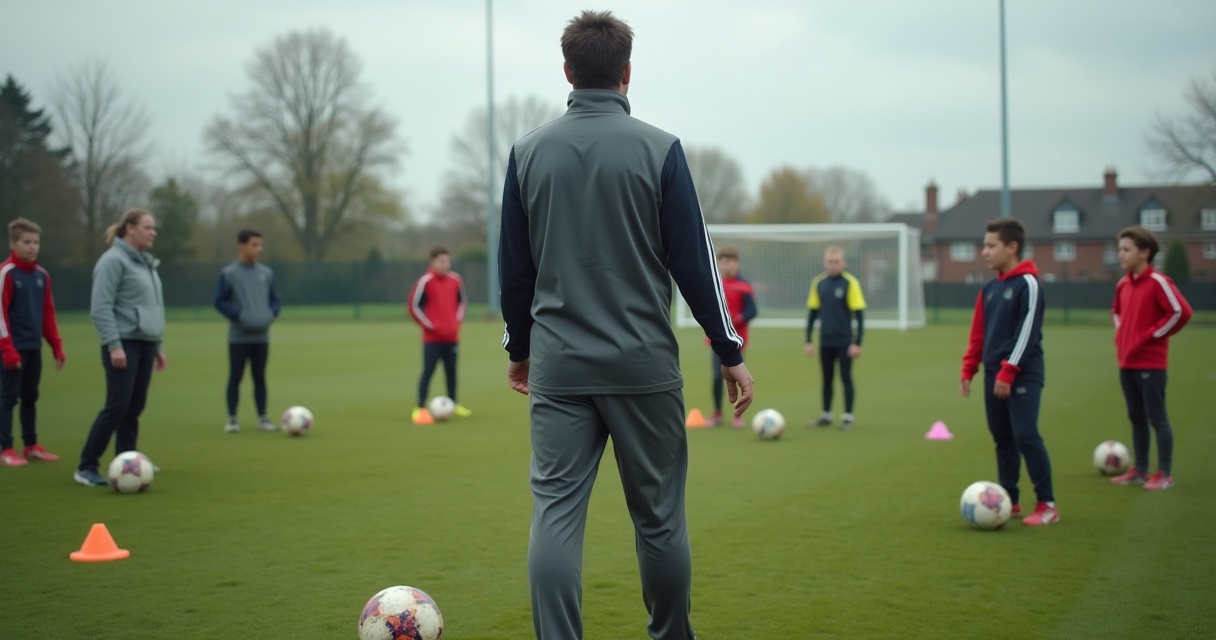
Learn how to coach defensive transitions at U14. This guide covers the critical 3-5 seconds after losing possession, with a practical 6v6 drill and progres
Defensive transitions are the forgotten third of football. Coaches invest heavily in attack and organised defence, yet the chaotic moment between losing the ball and settling into shape often goes unpracticed. At U14, your players have the tactical maturity to understand that games aren't won in one phase—they're won in the transition between them.
When your team loses possession, the next 3–5 seconds are critical. In this window, opponents are most dangerous: your shape is broken, momentum favours the counter-attack, and disorganisation spreads quickly. Players who react instinctively, sprint to defensive positions, and reorganise as a unit prevent soft goals and regain control. This session builds those habits systematically.
Why Defensive Transitions Matter at U14
At this age, players are developing genuine game intelligence. They understand that football flows between phases, and they're mature enough to take collective responsibility. Defensive transitions develop four essential skills:
Game awareness. Players learn to scan and anticipate rather than become passive when possession is lost. This mental readiness transfers directly to match situations where transitions happen at pace and unpredictably.
Decision-making under pressure. Unlike static defensive drills, transitions demand instant positioning choices. Should you press high or drop deep? Who covers which space? These decisions become automatic through repetition.
Work rate and resilience. Sprinting into shape after losing the ball builds physical and mental toughness. Players learn that possession is temporary and require constant readiness.
Collective discipline. Transitions teach players their role within the team shape. This shared responsibility strengthens defensive cohesion and reduces individual errors.
When transitions are drilled systematically, your team looks organised faster, concedes fewer turnovers, and builds confidence in their shape. The bonus: strong defensive habits free you to be more adventurous in attack.
The 6v6 Defensive Transition Drill
Setup: Create a 50×40 yard area divided into two equal halves with a clear halfway line. You need 12–16 players (can split into two rotating groups for smaller squads).
Structure: One team attacks freely in the attacking half while defenders stay compact in the defending half. When possession is lost, the defending team immediately transitions: they trigger a press, recover into shape, and reorganise. The attacking team becomes defenders and must react within 2 seconds. Run 3-minute blocks with 1-minute recovery between rounds.
Why this works: The constraint of two defined halves forces discipline. Defenders can't wander aimlessly—they have a clear trigger point (ball enters their half) and must respond decisively. Attackers must transition quickly or risk being caught out of shape. The time pressure (2 seconds) makes the drill game-realistic; players can't think—they must react.
Coaching Cues That Stick
Use these phrases consistently to embed the right habits:
"First touch is a recovery run." Don't waste the first touch controlling the ball. Use it to transition into defensive position. This reframes mindset instantly.
"Eyes up before you're pressed." Encourage players to scan the field before they're under pressure. Anticipation beats reaction.
"Communicate positions." Defensive transitions are chaotic; voices organise chaos. Insist on constant communication: calling shapes, covering space, directing teammates.
"Compact first, extend second." Players often sprint to their final position too early. Instead, ask them to compact the space around the ball first, then extend to wider areas. This prevents gaps.
"Run past the ball carrier to cover space." The most dangerous moments come when players surround the ball but abandon space. Demand that the closest players press while others cover gaps behind.
Three Progressions to Build Complexity
Progression 1: Add a goalkeeper and goal. Introduce a real consequence. Defenders must transition with purpose—to protect the goal. Attackers must work back to shape to prevent conceding. This shifts focus from abstract movement to functional positioning.
Progression 2: Possession limit. Allow the attacking team only 5 passes before transitioning or losing possession. This increases transition frequency dramatically. Players must stay mentally sharp because transitions come every 15–20 seconds. Work rate rises naturally.
Progression 3: Zone restrictions. Defenders can only leave their defensive zone after a trigger—for example, when the ball moves into the attacking half. This teaches positional discipline and delayed pressing. Players learn when to press and when to drop, rather than reacting chaotically.
Implementation Tips
Start small. Don't overcomplicate the drill on day one. Let players understand the basic principle (react quickly to organisation) before adding layers.
Freeze and review. Pause occasionally to highlight good transitions. Show players what fast organisation looks like. Specificity builds habit faster than repetition alone.
Rotate roles. Let defending teams attack and vice versa. This develops empathy—players understand both the attacking intent and defensive pressure.
Track progress. Count how many times transitions are organised in under 3 seconds. Make it a competition. Players respond to clear metrics.
The Long-Term Gain
Defensive transitions aren't flashy. They won't draw crowds or win headlines. But they prevent the careless goals that lose matches. They build the defensive discipline that underpins confident, expansive attacking. And they teach U14 players that football is a game of constant flow—not separate phases, but connected moments where work rate and intelligence shine through.
Drill transitions weekly. Your team will stay organised longer, respond faster, and look tougher to beat.
Written and reviewed by the PlayTactiq Coaching Team
Practical guidance for grassroots coaches, shaped around age-appropriate sessions, clear coaching language and real match-day problems.
Put it into a session
Ready-to-run U13 and U14 session plans
Setup, animated diagrams, coaching points and player-number adaptations — every U13 and U14 session in one place.
U13 and U14 football session plans →