
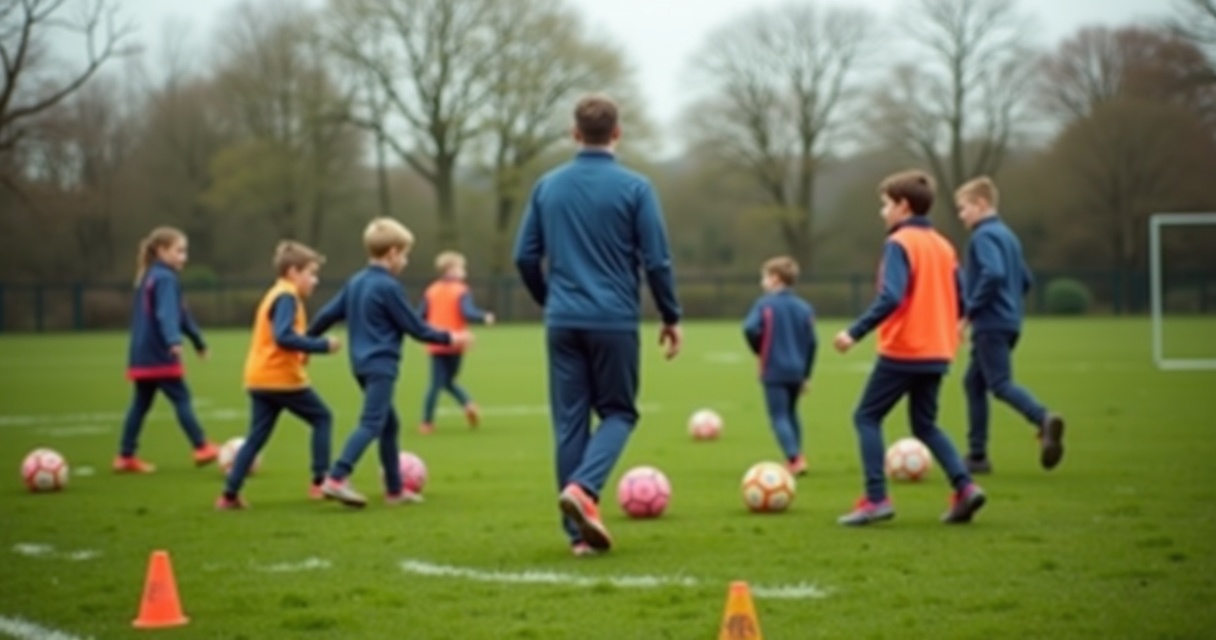
Build U8 confidence through play-based dribbling drills. Four engaging skill stations combine technical development with joy, keeping every young player ac
Confidence is the secret ingredient in youth football development. Young players who feel safe to explore the ball, make mistakes, and celebrate their efforts become footballers who embrace challenges and develop genuine love for the game.
At U8, children learn best through play, not lectures. They thrive on immediate feedback, visual demonstrations, and peer encouragement. This week's Fun Football Skills Fiesta session transforms dribbling practice into four exciting stations where technical improvement happens naturally alongside character development—resilience, creativity, and enthusiasm.
Why Play-Based Learning Works for Young Footballers
Young players aged 8 don't need rigid technical instruction delivered through endless repetition. They need exploration, celebration, and success experiences. When children experience small wins repeatedly and feel acknowledged for their effort, confidence emerges naturally.
The competitive elements in this session are cooperative, not eliminating. Every player stays active throughout, maintaining engagement and maximizing touches on the ball. This inclusive approach ensures no child sits on the sidelines watching others play—a fundamental principle of effective grassroots coaching.
By embedding dribbling skills within game-based activities, you're building more than technical ability. You're creating a psychological foundation where children associate football with joy and personal achievement. This positive association sustains development far beyond a single session.
Setting Up Your Skills Fiesta
You'll need a 40x30 yard area divided into four 20x15 yard zones. With 12-16 players, rotate groups every 8-10 minutes so each station receives fresh energy and enthusiasm.
Each station requires:
- 6-8 cones
- 3-4 footballs
- Clear visual boundaries (use bibs or additional cones)
The rotation system works beautifully because it prevents fatigue, maintains intensity, and gives every player equal development time. It also helps you observe different players in different contexts, noticing who excels in competitive settings versus cooperative activities.
Station 1: Rainbow Run – Finding Smooth Pathways
Players dribble through a cone zigzag course, experimenting to find the smoothest, most efficient path. This station develops close control and directional awareness while allowing individual creativity.
Progression pathway:
- Level 1: Weave using outside foot only, then inside foot only. This builds single-foot control and improves weaker foot development.
- Level 2: Add a defender jogging passively alongside—not blocking, just creating movement pressure. This introduces game-realistic conditions without overwhelming young players.
- Level 3: Remove cones entirely. Players dribble freely while staying in zone, focusing on close control at varied speeds. Pure ball mastery emerges.
Coaching cue: "Keep the ball close to your feet. Look up occasionally to see space."
Station 2: Treasure Hunt – Speed and Decision-Making
Place 8 cones scattered randomly across the zone. Players dribble toward any cone, stop the ball exactly on it, celebrate, then move to another cone. This develops ball control, spatial awareness, and—crucially—the joy of success.
Progression pathway:
- Level 1: Increase speed of movement between cones, building confidence at higher velocities.
- Level 2: Add a second player who must reach a different cone—creating friendly competition that maintains engagement.
- Level 3: Implement a gentle 1v1 where one player defends a designated cone. Players learn pressure management in low-stress situations.
Coaching cue: "Use small touches when moving fast. Celebrate when you reach your cone!"
Station 3: Dribbling Relay Races – Teamwork and Ownership
Players dribble around two cones placed 15 yards apart, return, and tag a teammate. Relay formats build confidence through teamwork—players feel supported by teammates rather than solely responsible.
Progression pathway:
- Level 1: Simple dribbling relay with direction changes—weaving between cones.
- Level 2: Introduce small obstacles or narrow gates to navigate, developing close control under spatial constraint.
- Level 3: Chase relay format where one team pursues another, adding intensity and game-realistic urgency.
Coaching cue: "Help your teammates succeed. Celebrate every effort, not just perfect runs."
Station 4: Cone Knock-Over Challenge – Accuracy and Purpose
Players dribble and attempt to knock over standing cones using the ball. Knocked cones score one point; knocked cones are set upright again. This develops striking accuracy while maintaining continuous activity.
Progression pathway:
- Level 1: Emphasize accuracy over speed—fewer touches, deliberate actions.
- Level 2: Introduce light defensive pressure, creating game-realistic challenge.
- Level 3: Timed team challenge where players earn collective points, reinforcing cooperation.
Coaching cue: "Keep the ball close. Use different parts of your foot. Help your team score together."
Universal Coaching Principles for Maximum Impact
Throughout all four stations, maintain upbeat, encouraging commentary. Celebrate effort and improvement over perfection. Praise bold attempts and frame mistakes as learning opportunities—this builds intrinsic motivation.
Rotate systematically so each group experiences fresh energy at each station. As groups arrive at stations, enthusiastically reintroduce activities like you're sharing exciting news. Your energy sets the emotional tone.
Use visual demonstrations frequently. Show players how movements look, not just verbal descriptions. Young players learn through seeing and doing, not hearing.
Conclusion
This Fun Football Skills Fiesta transforms traditional dribbling practice into an experience where U8 players develop technical skills, confidence, and genuine love for football simultaneously. By combining technical development with intrinsic motivation through play, you're building foundations that sustain excellence far beyond this single session.
When young players leave your session buzzing with excitement, talking about their achievements, and eager for next week—that's when real development happens.
Written and reviewed by the PlayTactiq Coaching Team
Practical guidance for grassroots coaches, shaped around age-appropriate sessions, clear coaching language and real match-day problems.
Put it into a session
Ready-to-run U8 session plans
Setup, animated diagrams, coaching points and player-number adaptations — every U8 session in one place.
U8 football session plans →