
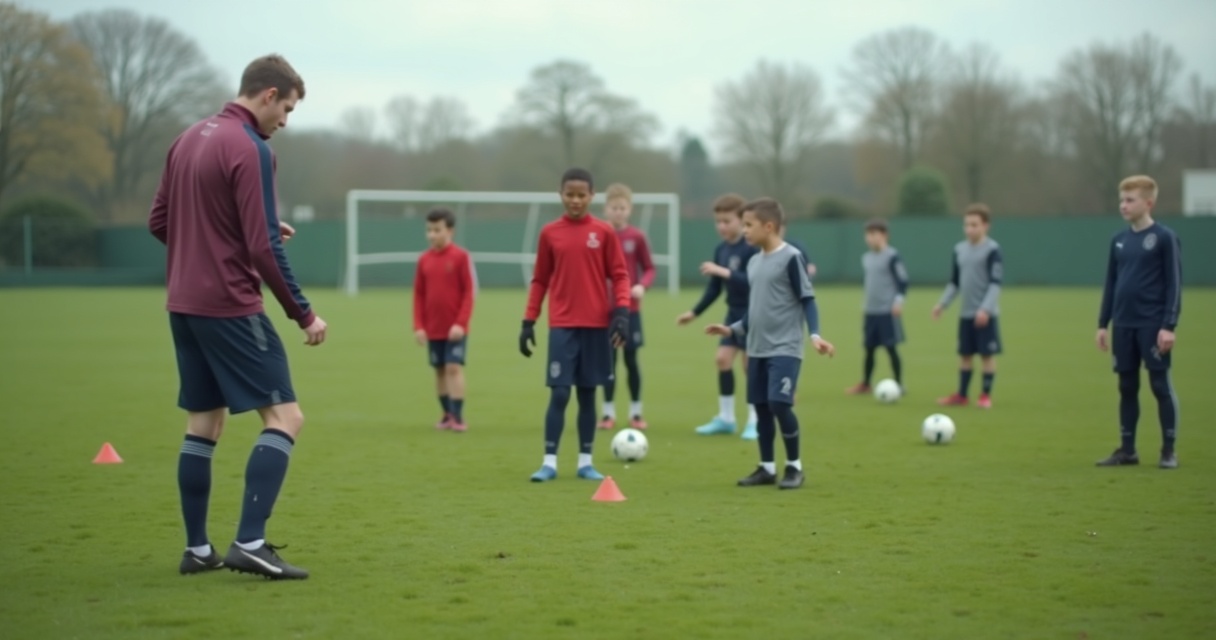
Learn how to teach U12 players high pressing tactics with proven drills. Build proactive defence, recover possession quickly, and create immediate counter-
Defence doesn't start at your goal line. At U12, one of the most transformative tactical principles you can introduce is high pressing—a proactive defensive strategy where your players move forward aggressively to win the ball back in the opponent's half, rather than sitting deep and absorbing pressure.
This shift from reactive to proactive defence changes everything. Your team stops waiting for trouble and starts creating it. Possession is recovered quickly. Counter-attacks launch immediately. Intensity stays high throughout the match. And crucially, your young players learn that every player is a defender the moment possession is lost.
In this session, we'll break down how to teach high pressing progressively, starting with single-player pressure and building toward coordinated team-wide pressing. By the end, your U12s will understand timing, positioning, and unit coordination—the foundations of intelligent defensive football.
Why High Pressing Matters for Young Players
High pressing transforms how your team plays. Instead of conceding possession and retreating, you take control of the game immediately after losing the ball. This has three critical benefits:
Confidence and momentum: Winning the ball back high gives your team instant attacking opportunities. Nothing builds confidence faster than recovering possession in the opponent's half and launching a quick counter-attack. Your players feel proactive, not reactive.
Match intensity: High pressing keeps your team engaged throughout the match. There's no passive defending—every player is thinking about the next pressing trigger. This consistency of effort reduces tired defending later in the game.
Limiting opponent danger: By pressing high, you're stopping dangerous play before it develops. You're cutting passing lanes, forcing rushed decisions, and winning the ball in areas where a turnover leads directly to scoring opportunities, rather than deeper defending scenarios.
At U12, this is also the perfect age to introduce the concept that defence is a team activity, not an individual task. High pressing requires communication, organisation, and collective understanding—skills that will serve your players throughout their football development.
The High Pressing Principles: Shape, Timing, Communication
Before running the drill, make sure your players understand three core principles:
Shape and compactness: Pressing isn't chaotic chasing. It's intelligent positioning where multiple players work together. When one player presses the ball carrier, teammates must cover gaps and cut passing lanes. The team maintains a compact, organised shape so that pressing triggers movement from the whole unit, not just individuals.
Trigger moments: Players need to recognise when to press and when to drop. The best pressers identify the moment possession changes and react immediately. At U12, focus on teaching timing over athleticism. A perfectly-timed press from a well-positioned player is far more effective than desperate chasing.
Communication: Constant talking is non-negotiable. Players must know who is pressing, who is covering, and which passing lanes are cut. Phrases like 'You go left, I'll cover right' or 'Pressing now!' keep everyone aligned. At this age, encourage communication constantly—it's the glue that holds your pressing shape together.
The Drill: Progressive High Pressing in Three Zones
Set up a 40x30 yard area split into three zones. You'll need 12 players minimum (6 attacking, 6 defending). Each zone introduces a different pressing layer.
Zone 1—Pressing Introduction (Individual focus):
One defender presses the ball carrier. Two support players cut passing lanes to the sides. The pressurer closes quickly with small, controlled steps, forcing the ball carrier into a tight space where rushing the pass is likely.
Coaching cue: 'Tight, tight, tight—make them rush.'
Focus here is on the pressurer's technique: small steps, body between the ball and the goal, arms up to make themselves bigger, closing distance without overcommitting.
Zone 2—Unit Pressing (Two-player coordination):
Now two defenders press together as a compact unit. The first pressurer attacks the ball aggressively. The second covers the most dangerous passing lane (usually the outlet pass). Teammates drop slightly to create a defensive shape behind them.
Coaching cue: 'You go left, I'll cover right.'
This zone teaches players that pressing is coordinated. One player doesn't freelance; pressing triggers immediate support and shape-building from others.
Zone 3—Full Team Press (6v6 coordination):
Progress to a full 6v6 where the entire defending unit shifts forward collectively the moment possession is lost. Players press in a coordinated wave, maintaining shape and compactness across the pitch. The defending team works as one unit, not isolated pressers.
Coaching cue: 'Press as a unit, not individuals.'
Progressions to Increase Challenge
Once your U12s grasp the basics, introduce progressions:
Neutral player advantage: Add a neutral player who always supports possession, creating a 7v6 advantage. This rewards successful pressing—the defending team must be cohesive and smart to win the ball when outnumbered.
Touch restrictions: Limit the ball carrier to two touches. Natural pressure increases because the attacking team must play faster, creating hurried decisions.
Bonus points for speed: Award bonus points if the defending team presses and wins the ball within 5 seconds. This reinforces the immediacy of pressing and prioritises quick transitions.
Key Coaching Cues to Repeat
- 'Close space quickly.'
- 'Communicate constantly.'
- 'Win it back, play forward.'
- 'Stay compact; don't create gaps.'
- 'Pressing as a team, not chasing as individuals.'
High pressing teaches young players that football is about collective action. When introduced properly at U12, it builds defensive intelligence, confidence, and tactical awareness that shapes how they play for years to come.
Written and reviewed by the PlayTactiq Coaching Team
Practical guidance for grassroots coaches, shaped around age-appropriate sessions, clear coaching language and real match-day problems.
Put it into a session
Ready-to-run U12 session plans
Setup, animated diagrams, coaching points and player-number adaptations — every U12 session in one place.
U12 football session plans →