
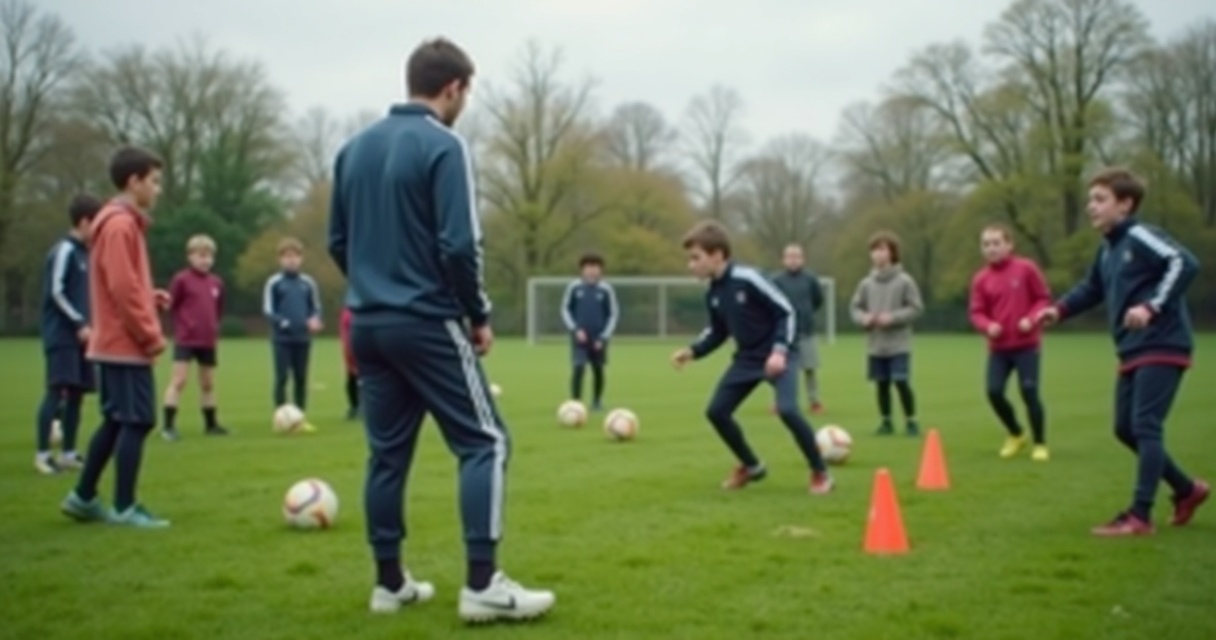
Learn how to teach U14 strikers effective pressing techniques with this practical drill. Develop decision-making, positioning, and coordinated pressing hab
Pressing from the front is one of the most underrated defensive skills in modern football. When your strikers actively press opposing defenders, they disrupt the build-up phase before dangerous attacks develop. At U14, establishing pressing habits early creates a foundation for intelligent pressing that will benefit players throughout their development.
A striker who presses effectively doesn't just chase the ball—they reduce time and space for centre-backs, force hurried passes, and create turnovers in advanced areas where your team can transition quickly. This is about positioning, timing, and understanding which pressing triggers to react to. Modern football demands forwards who work both ends of the pitch, and players who master pressing from the front become significantly more valuable to their teams.
Why Strikers Need to Learn Pressing Fundamentals
Many grassroots coaches focus solely on attacking development, overlooking the fact that intelligent pressing is a collective responsibility. When your front line doesn't press, defenders are forced to cover more ground, creating gaps in midfield and leaving your goalkeeper exposed to long balls. Conversely, strikers who press as a unit create a compact, harder-to-break-down team structure.
At U14, players are developing their game reading and decision-making abilities. Teaching pressing now embeds these habits early, so players understand that defending isn't reactive—it's proactive. Strikers who press intelligently also improve their positioning awareness, learn to anticipate passes, and develop the work ethic that coaches respect. They become complete players.
The key principle is simple: cut off passing lanes rather than diving in recklessly. Strikers should press when the ball is at an opponent's feet or moving towards them, not chase it across the entire pitch. This distinction separates intelligent pressing from mindless energy-burning.
The Three-Zone Pressing Drill
This drill teaches strikers to recognise pressing triggers, coordinate with teammates, and execute pressing movements with purpose. Set up a 40x30 yard area divided into three zones: defensive third, middle third, and attacking third.
Setup:
- 12-16 players split into two equal teams
- One team attacks from the back (4v2 in defensive third)
- The defending team positions 2 strikers in the attacking third and 2 midfielders in the middle third
- The attacking team scores by completing 8 consecutive passes
- The defending team scores by winning the ball in the attacking third
- Run each round for 90 seconds, then rotate roles
Objective: Strikers press immediately when the ball enters the attacking third, forcing errors and winning possession in dangerous areas. This creates game-realistic scenarios where pressing leads to tangible rewards (goals or possession in advanced positions).
The drill forces strikers to make quick decisions: Do I press now? Do I wait? Who is my pressing partner? These decision-making moments are invaluable for U14 development.
Progressions to Develop Pressing Awareness
Progression 1: Trigger Recognition Add a rule that strikers can only press when the ball is moving forward. This teaches players to recognise pressing triggers rather than pressing passively. Players learn to anticipate when a pass is coming and position themselves accordingly. This progression develops reading the game—a critical skill at intermediate level.
Progression 2: Coordinated Pressing Introduce a support midfielder. Now strikers must coordinate their press: one player closes the ball carrier while the other cuts a passing lane. This teaches pressing as a unit rather than individually. Communication becomes essential. Encourage players to talk—'You press, I cover,' or 'I'll block the pass.' This is where pressing becomes truly intelligent.
Progression 3: Realistic Match Pressure Expand to 50x40 yards with a goalkeeper. Now focus on forcing poor backpasses and crosses that the keeper must handle under pressure. This progression adds defensive realism. Strikers learn that pressing isn't just about winning the ball—it's about creating uncomfortable situations for opponents, even if possession isn't immediately regained.
Key Coaching Cues for Effective Pressing
During the drill, use these coaching cues to reinforce correct pressing behaviour:
- 'Show your intention early' – Strikers should move towards the ball carrier before they receive possession, signalling intent and reducing time available to make a decision.
- 'Block the easy pass, not the ball' – Position your body to cut off the most dangerous passing lane, not to win the ball. This forces the opponent to play a difficult pass.
- 'Press as a pair' – Strikers must press together. One closes, one covers. Lone pressing is ineffective and leaves gaps.
- 'Recover quickly if you miss the press' – If a pass beats your press, immediately shift your shape and reposition. Don't chase the ball sideways.
- 'Communicate who is pressing' – Constant talking ensures clarity. Players should know their roles and responsibilities in every pressing situation.
Making It Match-Realistic
After players understand the drill fundamentals, introduce game-realistic scenarios. Add centre-backs making decisions under pressure. Allow the attacking team to switch play. Create situations where pressing must be timed perfectly, or opponents will exploit space behind the press.
The goal is to develop strikers who understand that pressing is purposeful, coordinated, and decision-based. Players who master these fundamentals at U14 become the intelligent, hard-working forwards that every coach wants in their team.
Conclusion
Teaching strikers to press intelligently is an investment in both team structure and individual development. This drill provides a practical, progressive framework to develop pressing habits, decision-making, and collective defensive responsibility. Your U14 strikers will become more complete players, and your team will become more difficult to break down.
Written and reviewed by the PlayTactiq Coaching Team
Practical guidance for grassroots coaches, shaped around age-appropriate sessions, clear coaching language and real match-day problems.
Put it into a session
Ready-to-run U13 and U14 session plans
Setup, animated diagrams, coaching points and player-number adaptations — every U13 and U14 session in one place.
U13 and U14 football session plans →