
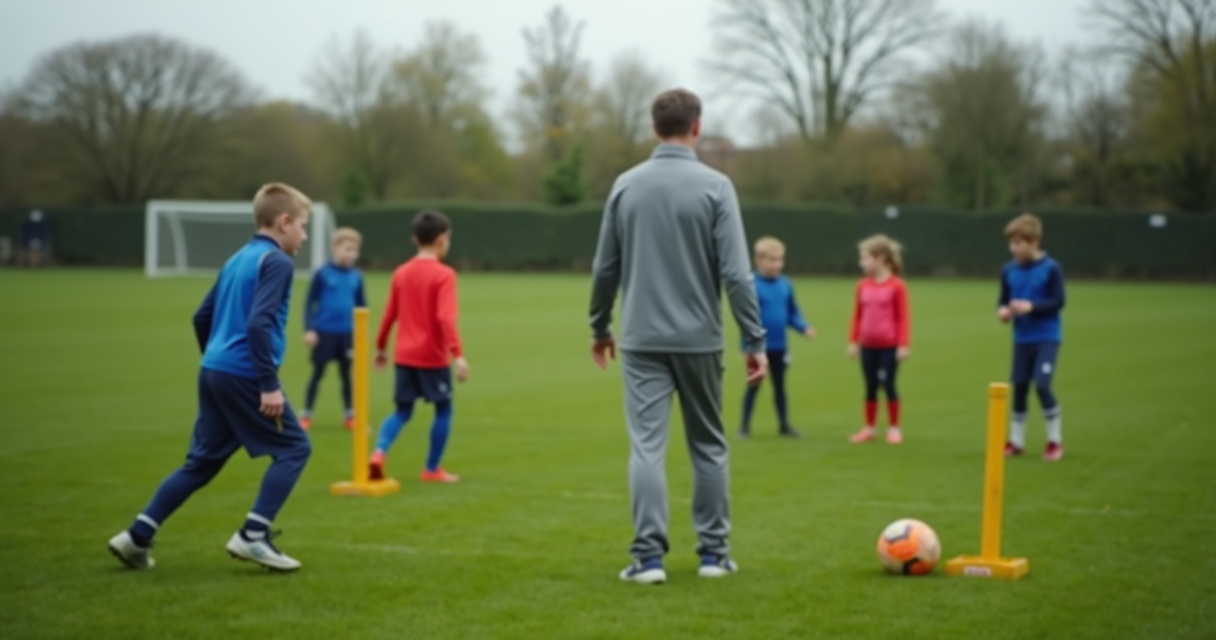
Learn how to teach U12 players defensive shape through practical drills. This session builds compact units that stop opposition attacks before they develop
Defensive shape is the foundation of team defending. When your players understand their positioning relative to teammates and the ball, they transform from individuals into a cohesive defensive unit that's genuinely difficult to break down.
At U12, this awareness is crucial. Players are developing tactical thinking and can grasp positional concepts when you present them clearly. Yet many grassroots coaches struggle with teaching defensive shape because players naturally want to chase the ball. Your challenge is helping them understand that staying compact and communicating prevents problems rather than reacting to them.
This drill addresses that gap directly, giving your players practical experience in maintaining shape while adapting to attacking threats.
Why Defensive Shape Matters at U12
A well-organized defensive shape serves multiple purposes that go beyond simply stopping goals. It reduces passing lanes available to attackers, provides cover for teammates, allows defenders to support each other, and creates predictability in how your team responds to threats.
Without shape, defenders operate in isolation. Opposition finds gaps easily. Skilled attackers exploit these spaces. But when defenders stay compact and communicate, they multiply their effectiveness far beyond their individual abilities.
Three coaching principles underpin effective defensive shape:
Compactness means reducing space between defenders horizontally and vertically. Opponents can't find easy passing options when defenders are tight. Communication ensures all players understand their role and can adjust together as the ball moves. Unit shifting means your entire defensive line moves together rather than individual players chasing the ball independently.
These three elements create a system rather than a collection of individual efforts.
The Drill: Defensive Shape Under Pressure
Setup and Space
Create a 40x30 yard area divided into three zones. Mark a 20x15 yard box in the attacking third using cones. This creates clear visual references for your players.
Divide your squad into groups of 6-8 players, rotating between attacking and defending teams of 4v4 or 5v5. You can run multiple groups simultaneously if your space allows, keeping all players active.
How It Runs
Defenders start in a compact line across the box, positioned approximately 12-15 yards from the goal line. Attackers begin outside the box with the ball.
Attackers must complete 5 passes to score 1 point. If defenders win the ball, they counter-attack toward the opposite end. Rotate defenders and attackers every 3-4 minutes. Play 2-minute rounds with brief coaching moments between each round.
This rotation keeps everyone engaged and means each player experiences both attacking and defending perspectives—valuable for tactical understanding.
Three Progressions: Building Understanding
Progression 1: Foundation (Maintaining Shape)
Attackers must keep the ball outside the box initially. Defenders focus purely on maintaining their line shape and not breaking formation to chase individual players.
Your coaching emphasis here: staying arm's length apart and keeping shape. Use these cues repeatedly:
- 'Stay connected as a line'
- 'Keep your shape before closing individual players'
- 'Compact means tight—feel your teammate's shoulder'
At this stage, defenders learn that shape itself is the objective. They develop the discipline to resist chasing the ball and instead maintain their unit's integrity. This foundation is essential before adding complexity.
Progression 2: Intermediate (Dynamic Shifting)
Now allow attackers to dribble forward to pressure defenders. Defenders must shift laterally and maintain compactness as the ball moves, moving as one unit rather than individually.
This progression introduces the reality of match play. Attackers move, and defenders must adjust without losing shape. Your cues shift emphasis:
- 'Shift together when the ball moves'
- 'Adjust together, not one at a time'
- 'Talk to your teammates about positions'
Watch for defenders who move independently while the line fragments. Stop play briefly and reset their shape, then restart. Repetition here builds the neural pathways that create automatic unit movement in matches.
Progression 3: Challenge (Shape Against Shooting Threats)
Add a goalkeeper. When attackers penetrate the box, defenders must adjust shape to cover shooting opportunities while maintaining communication and compactness.
This final progression simulates genuine match scenarios. Defenders now understand shape intellectually and must apply it under the pressure of actual goal-mouth situations. The goalkeeper's presence creates urgency—defenders know they're protecting someone.
Coaching Tips for Success
Use repetition strategically. Players need multiple exposures to these concepts. Three 2-minute rounds against different opponents teaches more than a single 10-minute period.
Coach compactness visually. Rather than explaining distances, show defenders standing shoulder-to-shoulder. Let them feel what 'arm's length apart' actually means. Visual and physical references work better than verbal descriptions alone at this age group.
Emphasize communication loudly. Stop play when defenders are silent. Make talking a non-negotiable requirement. Call out every time you hear clear communication: 'That's what I want—great shout!' Positive reinforcement develops the habit.
Resist the urge to add complexity too quickly. Many coaches introduce too many variables simultaneously. Stick with each progression until defenders demonstrate understanding, then progress. Patience builds genuine competence.
Highlight defensive wins clearly. When defenders successfully prevent a goal or win the ball while maintaining shape, celebrate it. Help players recognize what they did right. This reinforces the behaviors you're developing.
What Your Players Will Learn
By the end of this session, intermediate U12 players will understand how defensive shape prevents attacking opportunities. They'll experience how staying compact as a unit is more effective than individual efforts. They'll develop the communication habits that create organized defending.
These aren't abstract tactical concepts anymore—they're lived experience from the practice pitch. That's when real learning happens.
Your role is simple but essential: create the environment, offer clear cues, and let repetition do its work. Your players will build the compact defensive shape that transforms matches.
Written and reviewed by the PlayTactiq Coaching Team
Practical guidance for grassroots coaches, shaped around age-appropriate sessions, clear coaching language and real match-day problems.
Put it into a session
Ready-to-run U12 session plans
Setup, animated diagrams, coaching points and player-number adaptations — every U12 session in one place.
U12 football session plans →